RiskProfiler vs SecurityScorecard
External Risk Intelligence Built for Modern Security Teams
Prioritize Exposure. Accelerate Trust. Reduce Risk.
Compare how RiskProfiler combines attack path intelligence, third-party risk validation, and trust workflows beyond score-based monitoring.

Industry Leaders

4.8/5

4.8 out of 5 stars

Best Ease of Use
2024




















Positioning Statement
" RiskProfiler gives CISOs one correlated external-exposure layer across attack surface, vendor, brand, dark web, cloud, and trust workflows; SecurityScorecard is strong in ratings-led supply-chain monitoring, but its public materials are less explicit about native cross-domain attack-path correlation. "
Unified in one platform
Cloud Exposure
Third-Party Risk
Threat Intel
Brand Abuse
Trust Workflows
✓
RiskProfiler — Unified, External-First
≈
SecurityScorecard Ratings-Led Vendor Risk Management
RiskProfiler vs SecurityScorecard:
A side-by-side comparison of RiskProfiler and SecurityScorecard across the capabilities that improve external threat visibility, prioritization, and response.
Unified external-risk program coverage

RiskProfiler
SecurityScorecard
External exposure platform breadth
RiskProfiler provides one consolidated external-risk operating layer across EASM, TPRM, digital brand risk, dark-web intelligence, and CTI, reducing tool sprawl for CISOs.
SecurityScorecard's public messaging focuses on supply-chain detection/response and security ratings. A broader external-exposure unification is less central in public messaging.
Agentic AI-powered prioritization model
KnyX AI continuously correlates findings across domains, and prioritizes them by mapping attack path, exploitability, business impact, and blast radius, going beyond simple risk scoring for decision making.
Public materials center A–F ratings across 10 factors and score-driven workflows. However, the attack path contextualization is not as prominent.
Cross-domain threat correlation
KnyX AI correlates cloud exposures, vendor risk, leaked credentials, brand abuse, CVEs/IoCs, and asset context into one reasoning layer.
Public materials describe EASM, vendor detection, partner signals, and AI agents, but a native cross-domain attack-path graph spanning vendor, cloud, brand, and leaked-data signals could not be verified from public documents.
Vendor breach impact and reassessment
KnyX Vendor AI continuously monitors third and fourth-party vendors, maps breach indicators to external exposures, enables adaptive questionnaires, and generates audit-ready TPRM reports with mitigation SLAs, in one contextual dashboard.
SecurityScorecard is strong on third and fourth-party visibility, breach insights, and AI questionnaires; public reassessment workflows appear closely tied to score changes, rule builder, and/or ServiceNow automation.
Vendor dependency & access governance
RiskProfiler's AI-powered threat intelligence maps over-permissive and unlisted vendor integrations, analyzes for blast radius, and enables in-app collaborations.
SecurityScorecard publicly documents third & fourth-party discovery and relationship confidence. Comparable privileged-access/blast-radius mapping for vendor integrations could not be verified from public documents.
Trust Center depth for buyer/partner
reviews
Self-serve Trust Center with auto/conditional approvals, NDA e-signature + audit logs, AI Q&A, live security score/posture, remediation timelines, subprocessor transparency, and granular sharing controls.
Trust Center publicly appears document-centric via Evidence Locker; Security Questionnaires adds AI-assisted response automation and a Trust Page/security portal.
Brand abuse detection & takedown
execution
RiskProfiler brand risk protection detects cloned sites, fake apps, counterfeit listings, phishing pages, and social abuse, then executes takedown workflows across registrars, hosts, social platforms, app stores, and CDNs.
Public materials indicate brand-abuse/phishing/fraud visibility through partner apps such as CSC. However, a native first-party end-to-end takedown management is Unverified publicly.
External cloud attack surface context
Dedicated external and cloud ASM maps internet-facing cloud assets, DNS, certificates, storage, exposed services, and shadow integrations; and correlate threat signals mapping attack paths.
SecurityScorecard covers external assets, Shadow IT alerts, auto-tagging, and automation. A cloud-specific external ASM module with comparable DNS/cert/storage/shadow-integration claims, however, could not be verified.
Workflow orchestration &
remediation ownership
Integrates with SIEM, SOAR, TIP, ticketing, Slack, Splunk, Zapier, and custom apps. Public reviews also emphasize ownership/remediation context and mitigation SLAs.
Strong marketplace and rule-based automation with Slack, Jira, Teams, ServiceNow, and XSOAR. However, we could not verify a native ownership/SLA orchestration beyond integrations.
Reporting clarity and analyst efficiency
RiskProfiler reduces alert fatigue by correlating feeds into one prioritized view. Its public reviews praise single-pane context, attack-path clarity, and rapid time-to-value.
Public reviews are positive on usability and monitoring, but recurring complaints mention false positives, unnecessary alerts, score-change clarity, and reporting/detail gaps.
*Comparison details are based on publicly available information reviewed as of January 2026 and may change over time.

Move Beyond External Threat Monitoring
See how RiskProfiler helps your team unify external attack surface visibility, prioritize risks with context, and accelerate remediation across vendors, brands, and exposed assets.
Trusted by 500+ enterprises












Why RiskProfiler Comes Out Ahead
RiskProfiler goes beyond scoring and monitoring by connecting exposure intelligence directly to prioritized remediation workflows.
From Ratings to Actionable Attack Path Context
RiskProfiler adds exploitability, blast radius, and attack path context, helping teams prioritize remediation instead of just tracking ratings.
Exposure-Driven Remediation Priorities
While its peer-benchmarking feature shows posture gaps, RiskProfiler maps real-world exposure and guides teams toward the most urgent corrective actions.
Operational Vendor Risk Management
RiskProfiler strengthens supply chain security with adaptive vendor risk questionnaires, and combining the findings with external exposure monitoring, for comprehensive threat picture.
Streamlining Trust Workflows
RiskProfiler’s Trust Center combines live posture, remediation updates, AI Q&A, and NDA workflows for continuous trust operations.
Too Many Alerts
Cut through the noise and get clear, prioritized insights with KnyX’s intelligent reasoning layer
Breach alert at 2 AM again?
Too many tools, not enough visibility?
Is your SOC drowning in noise?
Lost track of critical assets?
Too many manual triage tasks?
Threat intel still siloed across teams?
Breach alert at 2 AM again?
Too many tools, not enough visibility?
Is your SOC drowning in noise?
Lost track of critical assets?
Too many manual triage tasks?
Threat intel still siloed across teams?
Risk Workflows with RiskProfiler
Align critical external-risk workflows within a single, cohesive operating framework enhanced by Agentic AI.
1/5
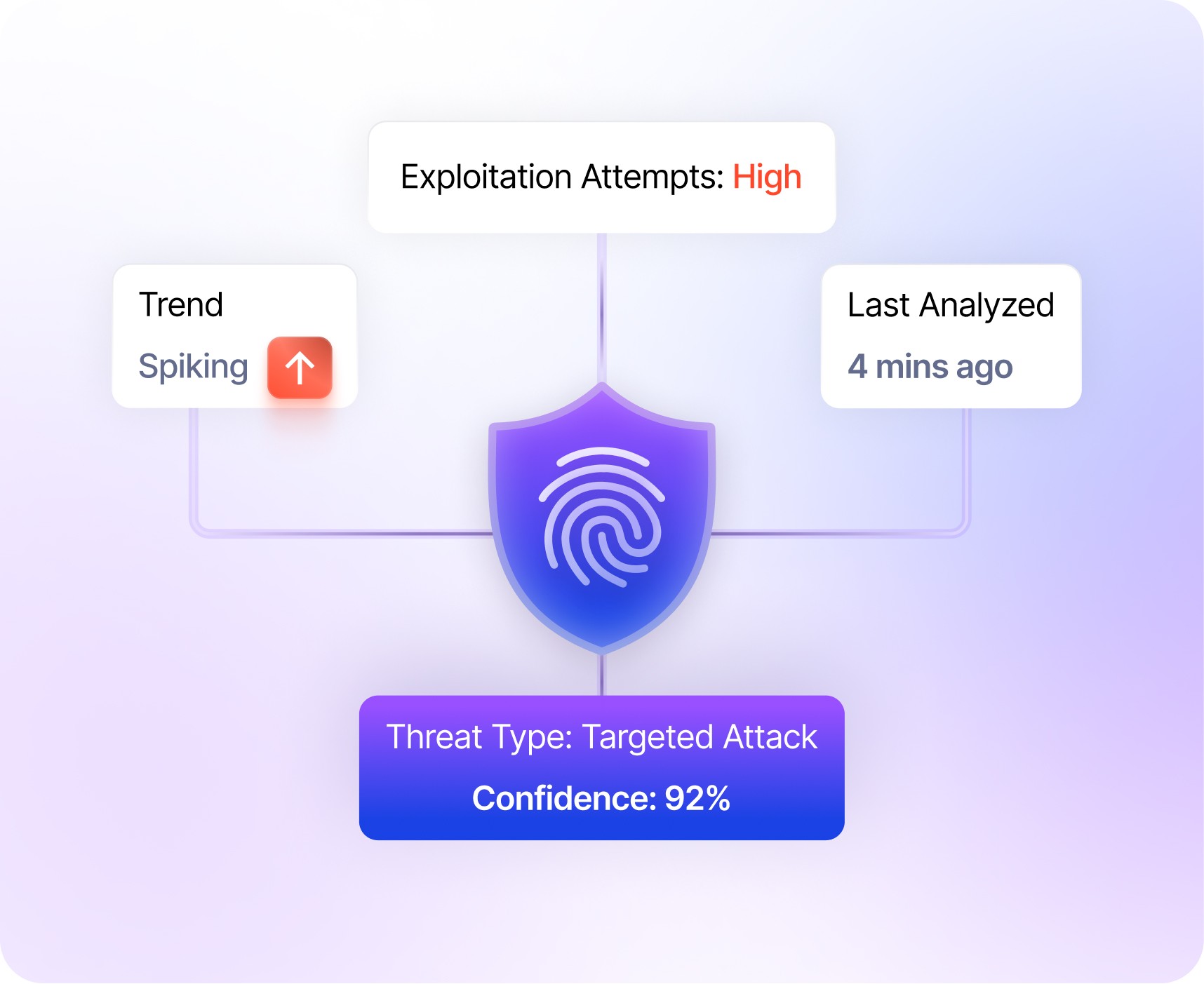
Platform Consolidation
Unified External Coverage
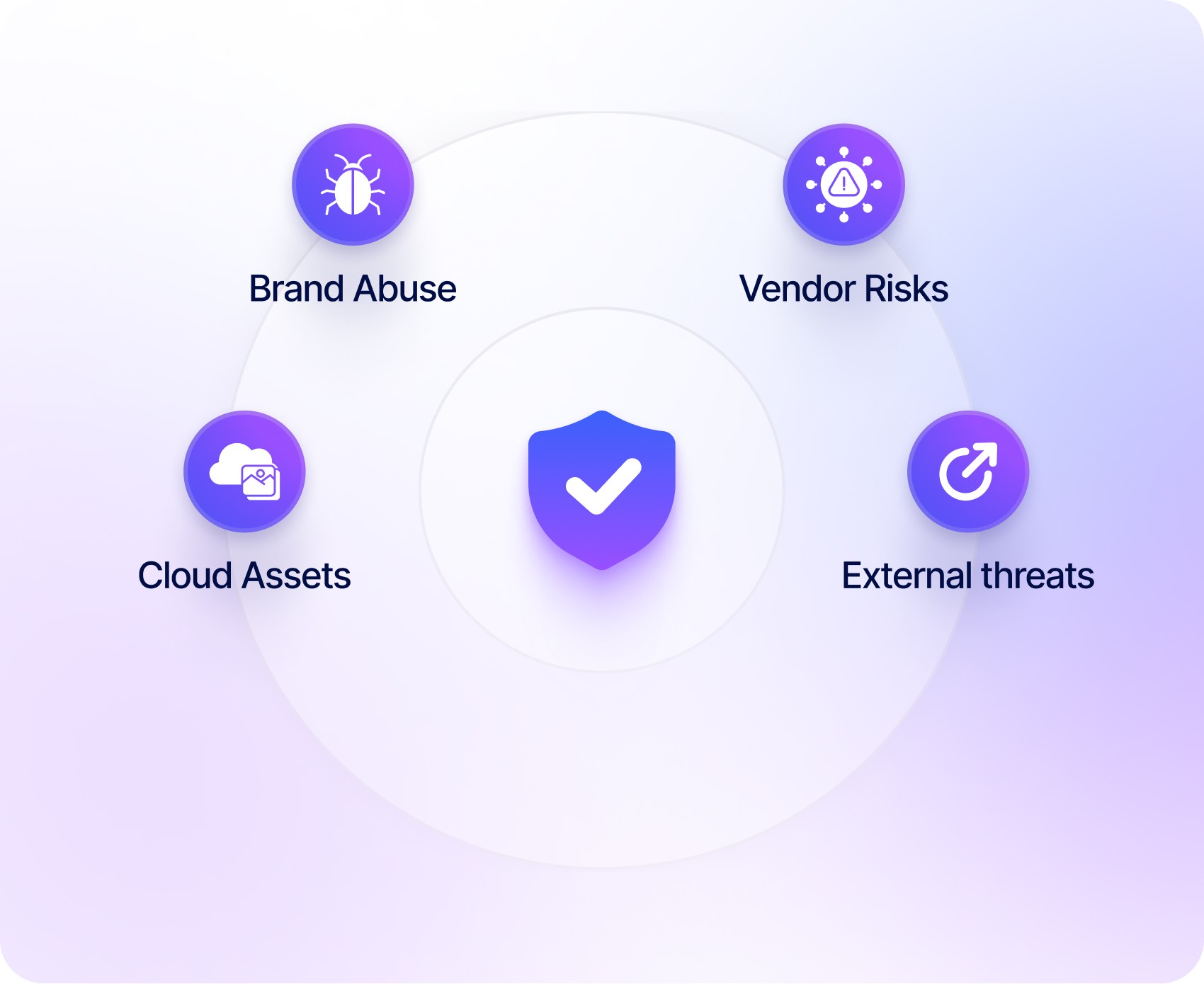
Unify attack surface, vendor, brand, dark web, and trust operations.
Comprehensive Tool Consolidation
Consolidate more external-risk programs sooner without adding separate specialist platforms.
2/5
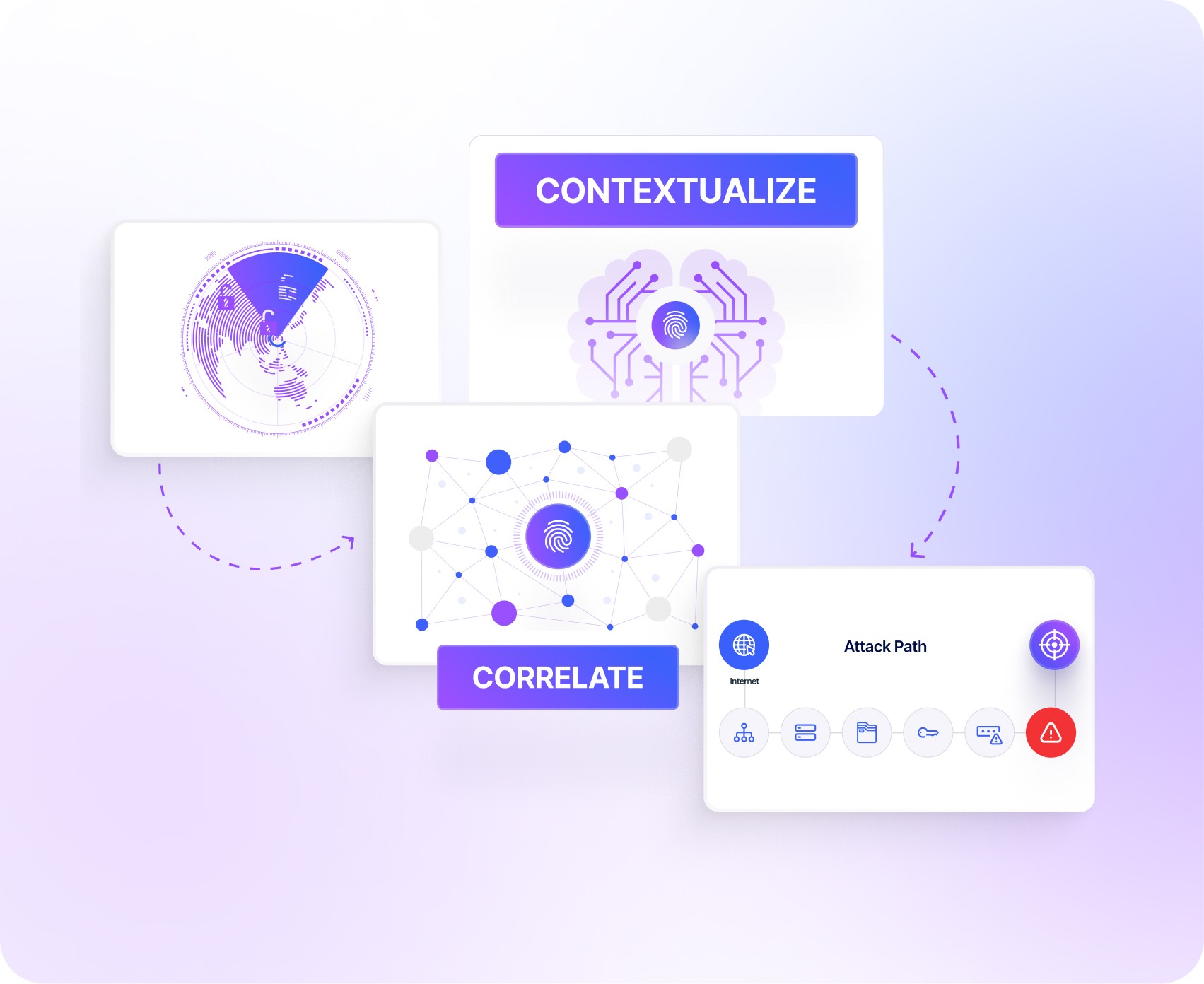
Faster Risk Prioritization
Attack Path Context
Prioritize risks using exploitability, blast radius, business impact, and attack paths.
Focus on Critical Fixes
Help teams understand what matters and why with contextual evidence.
3/5
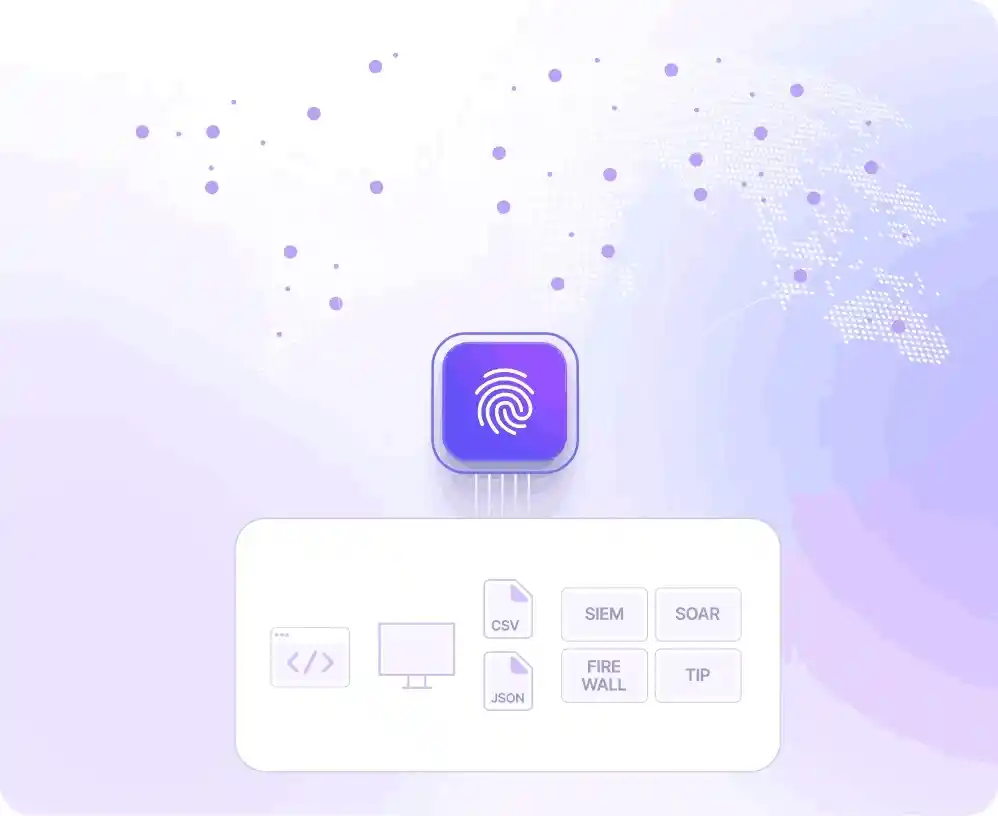
Integrated Risk Intelligence
Unified Risk Reasoning
Correlate asset context, cloud findings, vendor issues, and leaked data.
Reduced Manual Efforts
Help analysts triage faster without jumping between disconnected products.
4/5
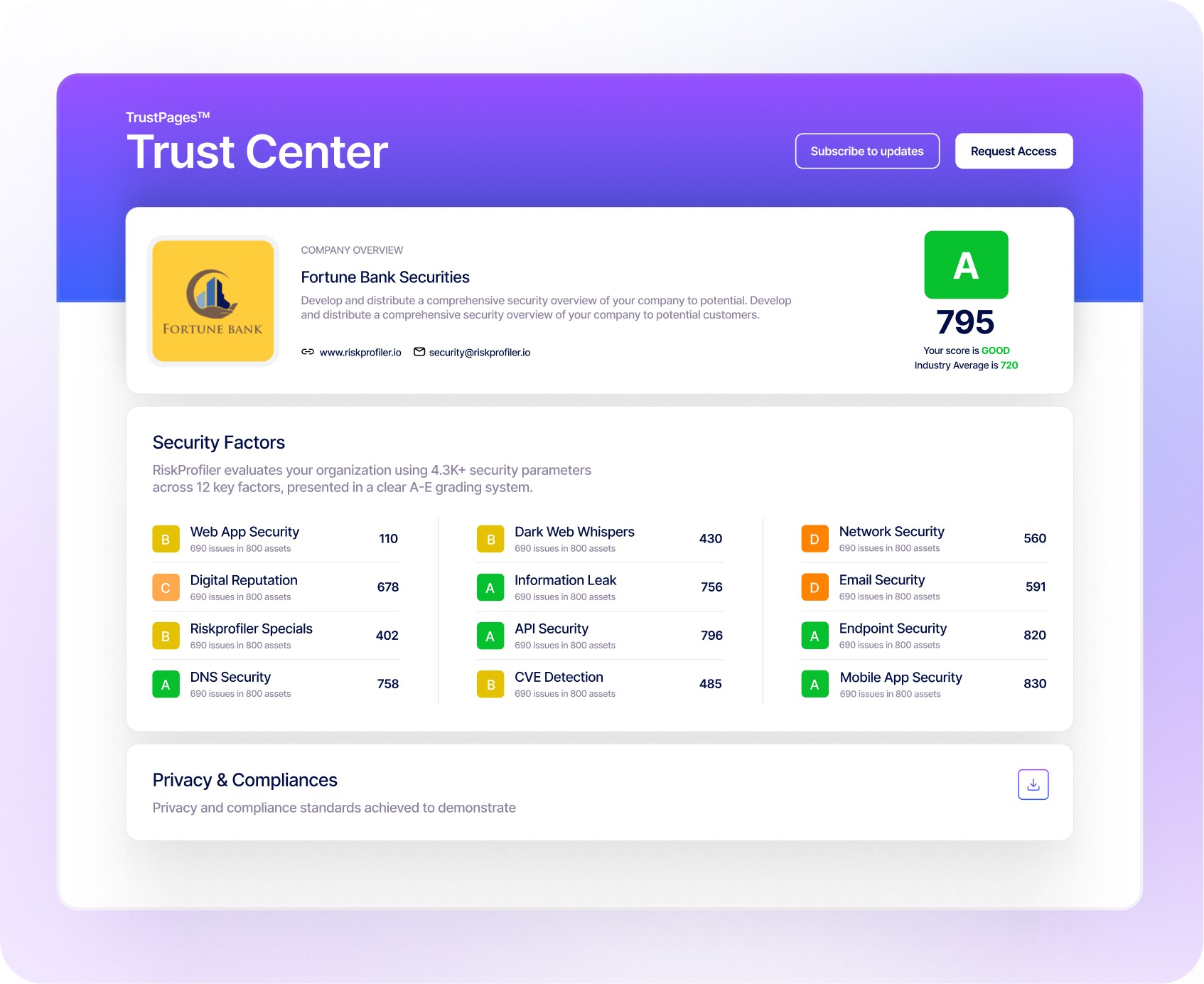
Streamline Response
Integrated Remediation Flows
Connect SIEM, SOAR, ticketing, Slack, and workflow systems for action.
Accountability At Scale
Track mitigation ownership and response progress across internal teams.
5/5
Trust Workflows
Trust Center Depth
Combine posture visibility, evidence access, approvals, and AI-assisted answers.
Stronger Buyer Confidence
Improve customer and partner trust during reviews, renewals, and diligence.
Latest Insights
Stay informed with expert perspectives on cybersecurity, attack surface management,
and building digital resilience.

Security Leaders
See what real users are saying about RiskProfiler - across
G2, Trustpilot, and X. We don't filter. We just ship.
4.8/5
4.8 out of 5 stars
Best Ease of Use
2024
It’s refreshing to have a platform that cuts through noise instead of adding more of it. RiskProfiler's unified insights have been consistently reliable and easy for the team to trust.

Leif Dreizler
Sr Engineering Manager, Semgrep
The shift from scattered alerts to a structured, contextual threat picture has been a big improvement. RiskProfiler's helped us skip the guesswork.

Travis McPeak
CEO Resourcely, Ex - Netflix & Databricks
RiskProfiler helped us keep up with breaches across our massive supply chain and cloud posture. Now, our team doesn't need to manually move through spreadsheets to find vendor security risks. It just gets done in minutes.

Lucas Nelson
Partner, Lytical Ventures
RiskProfiler not only shows us alerts, but it also communicates the problem it can cause and how. It shows how separate signals relate, which helps us move faster during investigations.

Nick Galbreath
GP at Aviso Ventures
RiskProfiler has made it easier to prioritize alerts with confidence. The platform’s correlation engine highlights the few issues that actually pose risk, not the dozens that look urgent but aren’t.

Andrew Peterson
GP at Aviso Ventures
RiskProfiler is a value-for-money tool. It’s fast, reduces overhead from multiple tools, and centralizes data for maximum efficiency—perfect for achieving meaningful outcomes quickly

Joe Schreiber
CEO, Appnovi
The unified dashboard has become an integral part of our security workflow. It’s straightforward, easy to use, and gives our analysts a clear view without the usual clutter. The best part is the platform scales as we need without any glitches or trouble.

Nikhil S.
Synack Red Team Legend
With RiskProfiler, noisy alerts drop off quickly. What’s left is a clean, reliable picture of the risks that truly matter. This clarity has transformed our workflow, driving efficiency and enhancing analyst productivity.

Praveen Nallasamy
Head of Product Security, BlackRock
The correlated insights and the attack path mapping of RiskProfiler are incredibly helpful. Instead of juggling separate tools, we now see exactly how issues connect across modules and can narrow down exactly where we need to focus.

Kelly Castriotta
Global Cyber Underwriting Officer, Markel
RiskProfiler gives us one unified platform to understand what’s happening across our entire threat surface. The contextual view takes a lot of guesswork out of prioritizing what to fix first.

Gary Merry
Board Member & Chief Growth Officer
We Have Answers!
What it is, how it works, and why digital and physical security must operate together.
Is RiskProfiler better than SecurityScorecard for AI-driven external risk management?
RiskProfiler stands out by applying AI across cloud, vendor, brand, and attack-path context in one reasoning layer. While SecurityScorecard also offers AI capabilities, RiskProfiler’s differentiation is in connecting signals into owned remediation workflows.
How is RiskProfiler different from SecurityScorecard if both offer EASM and TPRM?
Both platforms support external attack surface management and third-party risk management. RiskProfiler’s advantage is its ability to correlate vendor, cloud, and brand findings into one external-exposure model for clearer prioritization and action.
Does SecurityScorecard provide stronger security ratings and benchmarking?
SecurityScorecard is well known for its A–F security ratings and benchmarking model. That makes it useful for executive visibility, but RiskProfiler offers deeper operational context for teams that need to investigate, prioritize, and remediate risk faster.
Why choose RiskProfiler over SecurityScorecard for remediation and response?
RiskProfiler helps teams move beyond monitoring by connecting exposures, attack paths, vendor risk, and brand threats into remediation workflows with ownership. This makes it better suited for organizations that want actionability, not just score visibility.
Which platform is better for CISOs comparing RiskProfiler vs SecurityScorecard?
The right choice depends on the buying priority. SecurityScorecard is strong for ratings-led benchmarking and supply-chain monitoring, while RiskProfiler is stronger for CISOs who want correlated external-risk intelligence, contextual prioritization, and unified remediation across domains.
Take a Product Tour
RiskProfiler vs SecurityScorecard
Prioritize Exposure. Accelerate Trust. Reduce Risk.
Compare how RiskProfiler combines attack path intelligence, third-party risk validation, and trust workflows beyond score-based monitoring.
Recognized by
Industry Leaders

4.8/5

4.8 out of 5 stars















Positioning Statement
" RiskProfiler gives CISOs one correlated external-exposure layer across attack surface, vendor, brand, dark web, cloud, and trust workflows; SecurityScorecard is strong in ratings-led supply-chain monitoring, but its public materials are less explicit about native cross-domain attack-path correlation. "
Unified in one platform
Cloud Exposure
Third-Party Risk
Threat Intel
Brand Abuse
Trust Workflows
✓ RiskProfiler
Unified, External-First
≈ SecurityScorecard Ratings-Led Vendor Risk Management
Book a Demo
RiskProfiler vs SecurityScorecard:
A look at how RiskProfiler consolidates fragmented risk signals into one unified external threat view.

RiskProfiler
RiskProfiler
Security
Scorecard
Unified dashboard for EASM, DRP, TPRM, & CTI
Less centralized in public messaging
Attack path mapping and contextualization
Attack path contextualization is less prominent
Cross-domain threat signal correlation
Cross-module correlation is not verified
TPRM tied to reports and mitigation SLAs
TPRM tied to score changes & rule builders
Maps vendor privileges and blast radius
Similar feature could not be verified
Trust Center & evidence portal for fast review
A Trust Center exists, but not as a product
AI powered brand protection & takedown workflow
A native takedown workflow can not be verified
A CASM module to detect cloud-specific risks
A native CASM module could not be verified
Native workflow & SLA orchestration
Such workflow could not be verified
Reduces alert fatigue with cotext
Public reviews flag alert noise and false positives
*Comparison details are based on publicly available information reviewed as of January 2026 and may change over time.

Unified of External Threats, Powered by KnyX AI
Move beyond siloed tools with RiskProfiler agentic AI. Correlate EASM, TPRM, BRP, and CTI into one platform.
Book a Demo Today
Unified of External Threats, Powered by KnyX AI
Move beyond siloed tools with RiskProfiler agentic AI. Correlate EASM, TPRM, BRP, and CTI into one platform.
Book a Demo Today
Attack Path
Context
Correlate risks to exploitability, blast radius, and real attack-paths prioritization.
Exposure-Led
Remediation
Turn exposure findings into prioritized fixes with clearer remediation ownership
Operational Trust Workflows
Unify vendor reassessment, trust-center responses, and remediation updates in one connected external-risk workflow.
RiskProfiler Advantage
Unified Threat Exposure Management Advantage
Too Many Alerts
Cut through the noise and get clear, prioritized insights with KnyX’s intelligent reasoning layer
Breach alert at 2 AM again?
Too many tools, not enough visibility?
Is your SOC drowning in noise?
Lost track of critical assets?
Too many manual triage tasks?
Threat intel still siloed across teams?
Breach alert at 2 AM again?
Too many tools, not enough visibility?
Is your SOC drowning in noise?
Lost track of critical assets?
Too many manual triage tasks?
Threat intel still siloed across teams?
Why
RiskProfiler Is More Cohesive
Align critical external-risk workflows within a single, cohesive operating framework enhanced by Agentic AI.
1/5
Platform Breadth
Unified External Coverage
Unify attack surface, vendor, brand, dark web, and trust operations.
Comprehensive Tool Consolidation
Consolidate more external-risk programs sooner without adding separate specialist platforms.
2/5
Risk Prioritization
Attack Path Context
Prioritize risks using exploitability, blast radius, business impact, and attack paths.
Focus on Critical Fixes
Help teams understand what matters and why with contextual evidence.
3/5
Integrated Risk Intelligence
Unified Risk Reasoning
Correlate asset context, cloud findings, vendor issues, and leaked data.
Reduced Manual Efforts
Help analysts triage faster without jumping between disconnected products.
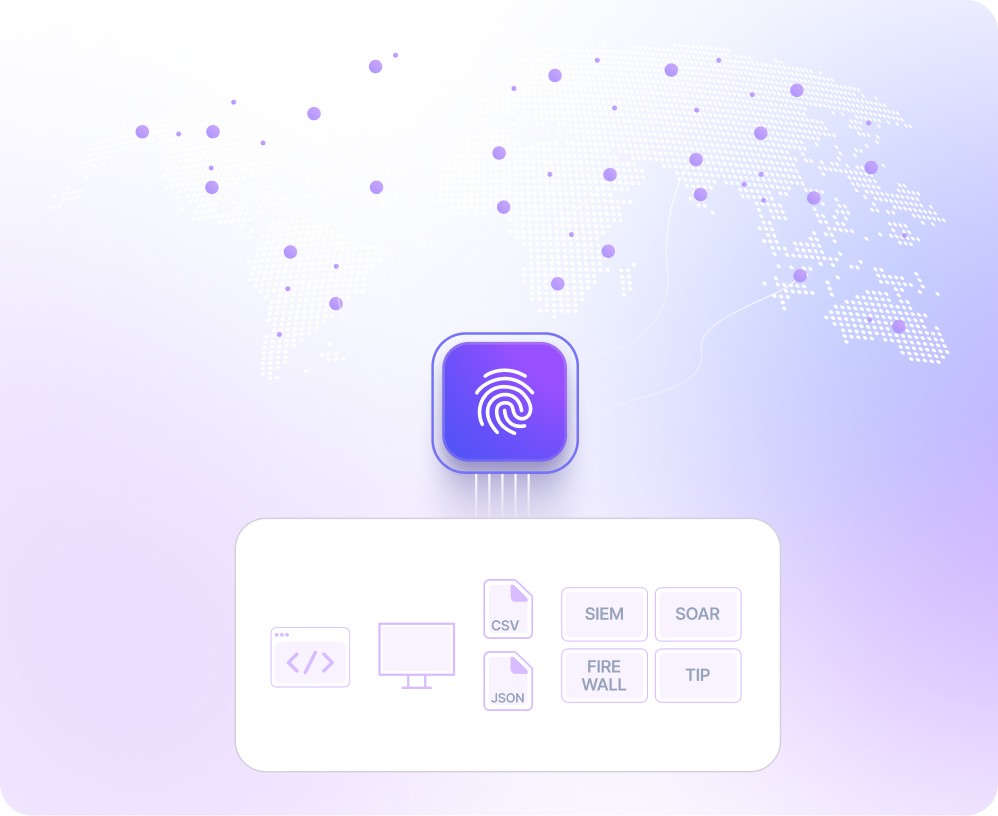
4/5
Streamline Response
Integrated Remediation Flows
Connect SIEM, SOAR, ticketing, Slack, and workflow systems for action.
Accountability At Scale
Track mitigation ownership and response progress across internal teams.
5/5
Trust Workflows
Trust Center Depth
Combine posture visibility, evidence access, approvals, and AI-assisted answers.
Stronger Buyer Confidence
Improve customer and partner trust during reviews, renewals, and diligence.
We Have Answers!
Explore our FAQ to learn more about how RiskProfiler can help safeguard your digital assets and manage risks efficiently.
Is RiskProfiler better than SecurityScorecard for AI-driven external risk management?
RiskProfiler stands out by applying AI across cloud, vendor, brand, and attack-path context in one reasoning layer. While SecurityScorecard also offers AI capabilities, RiskProfiler’s differentiation is in connecting signals into owned remediation workflows.
How is RiskProfiler different from SecurityScorecard if both offer EASM and TPRM?
Both platforms support external attack surface management and third-party risk management. RiskProfiler’s advantage is its ability to correlate vendor, cloud, and brand findings into one external-exposure model for clearer prioritization and action.
Does SecurityScorecard provide stronger security ratings and benchmarking?
SecurityScorecard is well known for its A–F security ratings and benchmarking model. That makes it useful for executive visibility, but RiskProfiler offers deeper operational context for teams that need to investigate, prioritize, and remediate risk faster.
Why choose RiskProfiler over SecurityScorecard for remediation and response?
RiskProfiler helps teams move beyond monitoring by connecting exposures, attack paths, vendor risk, and brand threats into remediation workflows with ownership. This makes it better suited for organizations that want actionability, not just score visibility.
Which platform is better for CISOs comparing RiskProfiler vs SecurityScorecard?
The right choice depends on the buying priority. SecurityScorecard is strong for ratings-led benchmarking and supply-chain monitoring, while RiskProfiler is stronger for CISOs who want correlated external-risk intelligence, contextual prioritization, and unified remediation across domains.
Security Leaders
See what real users are saying about RiskProfiler. We don't filter. We just ship.
4.8/5
4.8 out of 5 stars
It’s refreshing to have a platform that cuts through noise instead of adding more of it. RiskProfiler's unified insights have been consistently reliable and easy for the team to trust.

Leif Dreizler
Sr Engineering Manager, Semgrep
The shift from scattered alerts to a structured, contextual threat picture has been a big improvement. RiskProfiler's helped us skip the guesswork.

Travis McPeak
CEO Resourcely, Ex - Netflix & Databricks
RiskProfiler helped us keep up with breaches across our massive supply chain and cloud posture. Now, our team doesn't need to manually move through spreadsheets to find vendor security risks. It just gets done in minutes.

Lucas Nelson
Partner, Lytical Ventures
RiskProfiler not only shows us alerts, but it also communicates the problem it can cause and how. It shows how separate signals relate, which helps us move faster during investigations.

Nick Galbreath
GP at Aviso Ventures
RiskProfiler has made it easier to prioritize alerts with confidence. The platform’s correlation engine highlights the few issues that actually pose risk, not the dozens that look urgent but aren’t.

Andrew Peterson
GP at Aviso Ventures
RiskProfiler is a value-for-money tool. It’s fast, reduces overhead from multiple tools, and centralizes data for maximum efficiency—perfect for achieving meaningful outcomes quickly

Joe Schreiber
CEO, Appnovi
The unified dashboard has become an integral part of our security workflow. It’s straightforward, easy to use, and gives our analysts a clear view without the usual clutter. The best part is the platform scales as we need without any glitches or trouble.

Nikhil S.
Synack Red Team Legend
With RiskProfiler, noisy alerts drop off quickly. What’s left is a clean, reliable picture of the risks that truly matter. This clarity has transformed our workflow, driving efficiency and enhancing analyst productivity.

Praveen Nallasamy
Head of Product Security, BlackRock
The correlated insights and the attack path mapping of RiskProfiler are incredibly helpful. Instead of juggling separate tools, we now see exactly how issues connect across modules and can narrow down exactly where we need to focus.

Kelly Castriotta
Global Cyber Underwriting Officer, Markel
RiskProfiler gives us one unified platform to understand what’s happening across our entire threat surface. The contextual view takes a lot of guesswork out of prioritizing what to fix first.

Gary Merry
Board Member & Chief Growth Officer
Voices of Security Leaders
Subscribe to our Newsletter
By submitting your email address, you agree to receive RiskProfiler’s monthly newsletter. For more information, please read our privacy policy. You can always withdraw your consent.