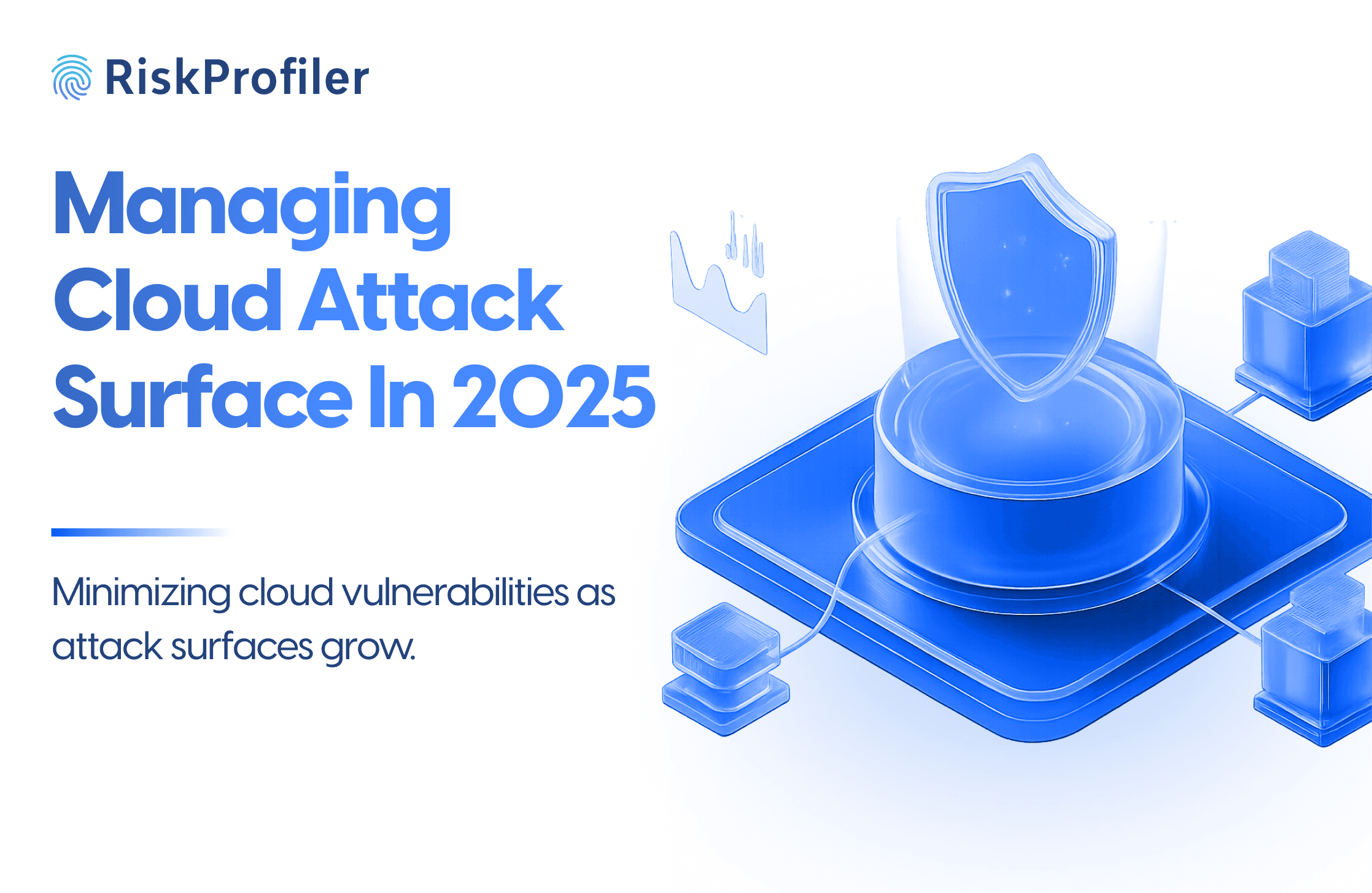
Managing Cloud Attack Surface in 2025
Managing Cloud Attack Surface in 2025
In the fast-paced technological environment, traditional monolithic practices are slowly becoming insufficient. To keep up with the advanced requirements of today’s society, businesses need to adopt more efficient, flexible, and scalable cloud computing solutions. However, the benefits of cloud networks come with an expanded attack surface, exposing organizations to a multitude of evolving cyber threats.
Read Time
7 min read
Posted On
Social Media
In the fast-paced technological environment, traditional monolithic practices are slowly becoming insufficient. To keep up with the advanced requirements of today’s society, businesses need to adopt more efficient, flexible, and scalable cloud computing solutions. However, the benefits of cloud networks come with an expanded attack surface, exposing organizations to a multitude of evolving cyber threats. External attack surface management (EASM) has become a cornerstone of managing Cloud Attack Surface, and as 2025 unfolds, managing this surface is more critical—and challenging—than ever.
The esteemed panelists, Setu Parimi, the CTO of RiskProfiler and Jonathan Miranda, cloud security expert, in our latest webinar explores the evolving challenges involved in managing Cloud Attack Surface, why it’s critical in cloud-native environments, and how innovations like DevSecOps are transforming security practices. Whether you’re safeguarding sensitive government data or managing dynamic multi-cloud architectures, understanding and managing your attack surface is no longer optional—it’s essential.
What Is External Cloud Attack Surface Management?
External Attack Surface Management is the process of identifying, understanding, and securing all potential entry points to your organization’s systems. Continuous monitoring of a network system helps the security protocol discover hidden assets and address existing weak points and possible attack paths. Continuous attack surface monitoring also helps in proactive digital brand protection, where the organization can discover and manage the potential loopholes before the cyberattack happens.
In cloud environments, a proactive approach is even more essential as the entry points multiply exponentially in such systems. An overlooked Kubernetes admin API, an accidentally exposed S3 bucket, or shadow IT projects operating outside official governance can provide attackers with easy access. The stakes are high: a single misconfiguration could lead to devastating financial and reputational losses, leading to severe legal consequences.
Managing Cloud Attack Surface involves three critical steps:
Identifying all public-facing assets, including shadow IT.
Assessing vulnerabilities and prioritizing remediation.
Continuously monitoring for changes that expose new risks.
Businesses can use different monitoring and observation techniques for attack surface management. One of these methods is deploying bug bounties on the internet. White hat hackers use pen testing or mimic the hacking patterns used by malicious actors to check for vulnerabilities present on the website.
How Cloud Computing Redefines the Attack Surface
Cloud computing has revolutionized infrastructure deployment. Tasks that once required weeks of coordination—securing hardware, configuring IPs, and managing DNS—now happen in minutes with a few clicks. But this convenience has introduced new challenges:
Ease of Deployment: Developers can spin up resources instantly, bypassing traditional change management processes.
Ephemeral Resources: Dynamic environments mean assets appear and disappear rapidly, complicating inventory management.
Multi-Cloud and Hybrid Architectures: Integrating resources across AWS, Azure, Google Cloud, and on-premises systems increases complexity.
Without a comprehensive strategy for managing Cloud Attack Surface, these factors create opportunities for attackers to exploit vulnerabilities in your defenses, leading to loss of business reputation and damaging assets.
The Shared Responsibility Model: A Double-Edged Sword
The shared responsibility model divides security duties between cloud service providers (CSPs) and their customers. While CSPs secure the infrastructure, customers are responsible for securing their applications and data. Misunderstanding this division can lead to costly mistakes. For example:
AWS provides tools like GuardDuty to detect threats, but enabling and configuring them falls on the customer.
Azure manages backend patching but doesn’t prevent customers from misconfiguring identity and access settings.
Businesses must treat the shared responsibility model as an opportunity to fortify their cloud environments. Providing role-appropriate training to the employees and end-users on these responsibilities and implementing robust governance is key to avoiding costly errors.
Challenges in Managing Cloud Attack Surfaces
Cloud security challenges mainly account for the hurdles organizations come across in protecting their cloud assets from external threats and malicious actors. Managing complex cloud environments connected with numerous APIs leaves open vulnerabilities that can be exploited by third-party actors. failure to adhere to strict security regulations can result in data loss, financial loss, legal repercussions, and loss of reputation.
Some of the popular security challenges are:
Shadow IT and Lack of Visibility: Employees often deploy resources without approval or oversight, leading to unknown and unmanaged assets. Without proper controls, shadow IT can undermine your security posture.
Ephemeral Resources: The elasticity of the cloud allows resources to scale up and down as needed. While efficient, it complicates maintaining an up-to-date inventory of internet-facing assets.
Multi-Cloud Complexity: Enterprises often leverage multiple CSPs, each with its own set of tools, terminologies, and security practices. Ensuring consistent protection across these environments is no small feat.
Hybrid Architectures: Integrating on-premises systems with cloud environments introduces unique security challenges, particularly in identity federation and data transfer.
Skill Gaps: Cloud security requires expertise across numerous services and configurations, from IAM policies to container orchestration platforms like Kubernetes. Few teams possess the breadth of skills needed to secure everything effectively.
Prioritizing Risks with Contextual Awareness
In large-scale environments, it’s not enough to identify vulnerabilities; businesses must prioritize them based on risk. A marketing website’s vulnerability isn’t as critical as a misconfigured database containing customer data.
Here’s how to enhance risk prioritization:
Asset Classification: Categorize assets by business criticality, ensuring the most sensitive systems receive top priority.
Contextual Intelligence: Combine CVSS scores with real-world exploitability data, such as activity in the CISA Known Exploited Vulnerabilities database.
Automation: Leverage tools to automate prioritization and focus human efforts where they matter most.
DevSecOps: Embedding Security into the Cloud Lifecycle
DevSecOps stands for Development, Security, and Operations. This is a development principle that integrates security into the development pipeline, addressing risks before they reach production. Adopting DevSecOps in your development lifecycle help you address security and configuration issues in your codes before deployment, preventing vulnerabilities and cyber attacks.
Here are actionable strategies for implementing DevSecOps for managing cloud attack surface:
Start with Infrastructure as Code (IaC)
Infrastructure as Code or IaC is a simple development transformation that is capable of addressing server configuration issues, helping them maintain consistency and resolve errors. Adopting IaC in DevSecOps also simplifies the debugging and security assessment process for the developers. This process provides the ability to address the issues using codes instead of traditional manual checks. This process also helps in automating infrastructure management, helping developers focus on development tasks. IaC can be successfully implemented to tackle security risks, save development costs, and improve overall team productivity.
Using tools like Terraform or CloudFormation, organizations can standardize secure configurations. By codifying infrastructure, businesses ensure consistency and reduce human error.
Leverage Policy Engines
The inclusion of a more productive and logical agile development methodology in DevSecOps helps organizations address the security requirements of a development lifecycle from the initial stages. It helps solve the bottleneck issue created by traditional development practices by pushing the security checks only towards the end of the cycle. When a development team adopts DevSecOps for development purposes, it requires them to adhere to some strict organizational and technical changes. To keep up with the pace of the DevOps team, the security division needs to integrate some of the tools that can prioritize alerts and reduce the number of false positives.
Policy engines like Open Policy Agent (OPA) and Kyverno enforce security rules automatically. For example, they can block Kubernetes deployments from using unapproved container images or enforce encryption.
Adopt Continuous Scanning
Continuous scanning is a critical part of DevSecOps that focuses on scanning the codes for possible vulnerabilities during the development and deployment stages of an application. Scanning your codes during the development lifecycle helps your team address and resolve the issue promptly before further escalations. This proactive approach of continuously monitoring the code syntaxes also prioritizes the security issues as per their threat intensity.
Incorporate security scanning into CI/CD pipelines. using tools that can identify vulnerabilities in containers, IaC, and dependencies before deployment will also help you tackle the possibility of cyber attacks.
Create a Collaborative Culture
DevSecOps advocates for cross-functional collaboration, where each member of the team participates in a similar capacity. A cross-functional team often uses various technical tools to execute their tasks. However, these teams can only succeed when paired with positive collaboration practices. Bridging the gap between developers, operations, and security teams ensures vulnerabilities are addressed without friction.
The collaboration effort in a DecSecOps team is reliant on peer teaching and a peer learning approach. In this effort, every team takes part in their capacity to contribute to the development process, share ideas, improve the product, and then deploy the software.
Essential Tools and Technologies for Managing Cloud Attack Surface
Modern External Attack Surface Management solutions combine cloud-native tools, third-party platforms, and custom engineering:
Cloud-Native Tools
AWS GuardDuty and Azure Defender provide real-time monitoring and alerts.
Google’s Security Command Center offers insights into GCP environments.
Third-Party Platforms
External Cloud Attack Surface Management Solutions that combine internal configuration data with external reconnaissance, presenting a unified view of risks.
Automation and AI
Automate asset discovery and vulnerability prioritization with AI-powered tools, reducing manual workload and alert fatigue.
Choosing the right combination of tools is critical for maintaining a secure and manageable attack surface.
Innovations for Managing Cloud Attack Surface
Innovation often stems from rethinking how teams operate. In External Cloud Attack Surface Management, the most impactful changes are often cultural:
Breaking Down Silos: Collaboration between developers, operations, and security is essential. Shared objectives reduce friction and accelerate response times.
Simulating Attack Paths: Building models that chain potential vulnerabilities offers insights into how attackers might exploit weaknesses.
Leveraging AI/ML: Advanced technologies can identify trends, prioritize risks, and detect anomalies faster than traditional methods.
Organizations that embrace these innovations gain a significant advantage in securing their environments.
Unique Considerations for Government Organizations
Government agencies face additional challenges in managing cloud attack surfaces:
Feature Gaps in GovCloud: Services often lag behind their commercial counterparts, and documentation may not reflect these differences.
Heightened Threat Landscape: State-sponsored attackers frequently target government systems, requiring advanced defenses.
Increased Scrutiny: Government systems are subject to intense internal and external audits, leaving no margin for error.
Secure-by-default deployments, coupled with stringent governance, can help address these unique concerns.
Conclusion: The Path Forward
In 2025, managing cloud external attack surfaces requires a blend of advanced tools, innovative processes, and a collaborative culture. From automating asset discovery to embedding security into the development pipeline, organizations must adapt to the complexities of cloud environments.
Implementing a proactive Cloud Attack Surface Management solution helps in a holistic brand protection approach and protects your digital assets from potentially malicious actors and cyber threats.
In the fast-paced technological environment, traditional monolithic practices are slowly becoming insufficient. To keep up with the advanced requirements of today’s society, businesses need to adopt more efficient, flexible, and scalable cloud computing solutions. However, the benefits of cloud networks come with an expanded attack surface, exposing organizations to a multitude of evolving cyber threats. External attack surface management (EASM) has become a cornerstone of managing Cloud Attack Surface, and as 2025 unfolds, managing this surface is more critical—and challenging—than ever.
The esteemed panelists, Setu Parimi, the CTO of RiskProfiler and Jonathan Miranda, cloud security expert, in our latest webinar explores the evolving challenges involved in managing Cloud Attack Surface, why it’s critical in cloud-native environments, and how innovations like DevSecOps are transforming security practices. Whether you’re safeguarding sensitive government data or managing dynamic multi-cloud architectures, understanding and managing your attack surface is no longer optional—it’s essential.
What Is External Cloud Attack Surface Management?
External Attack Surface Management is the process of identifying, understanding, and securing all potential entry points to your organization’s systems. Continuous monitoring of a network system helps the security protocol discover hidden assets and address existing weak points and possible attack paths. Continuous attack surface monitoring also helps in proactive digital brand protection, where the organization can discover and manage the potential loopholes before the cyberattack happens.
In cloud environments, a proactive approach is even more essential as the entry points multiply exponentially in such systems. An overlooked Kubernetes admin API, an accidentally exposed S3 bucket, or shadow IT projects operating outside official governance can provide attackers with easy access. The stakes are high: a single misconfiguration could lead to devastating financial and reputational losses, leading to severe legal consequences.
Managing Cloud Attack Surface involves three critical steps:
Identifying all public-facing assets, including shadow IT.
Assessing vulnerabilities and prioritizing remediation.
Continuously monitoring for changes that expose new risks.
Businesses can use different monitoring and observation techniques for attack surface management. One of these methods is deploying bug bounties on the internet. White hat hackers use pen testing or mimic the hacking patterns used by malicious actors to check for vulnerabilities present on the website.
How Cloud Computing Redefines the Attack Surface
Cloud computing has revolutionized infrastructure deployment. Tasks that once required weeks of coordination—securing hardware, configuring IPs, and managing DNS—now happen in minutes with a few clicks. But this convenience has introduced new challenges:
Ease of Deployment: Developers can spin up resources instantly, bypassing traditional change management processes.
Ephemeral Resources: Dynamic environments mean assets appear and disappear rapidly, complicating inventory management.
Multi-Cloud and Hybrid Architectures: Integrating resources across AWS, Azure, Google Cloud, and on-premises systems increases complexity.
Without a comprehensive strategy for managing Cloud Attack Surface, these factors create opportunities for attackers to exploit vulnerabilities in your defenses, leading to loss of business reputation and damaging assets.
The Shared Responsibility Model: A Double-Edged Sword
The shared responsibility model divides security duties between cloud service providers (CSPs) and their customers. While CSPs secure the infrastructure, customers are responsible for securing their applications and data. Misunderstanding this division can lead to costly mistakes. For example:
AWS provides tools like GuardDuty to detect threats, but enabling and configuring them falls on the customer.
Azure manages backend patching but doesn’t prevent customers from misconfiguring identity and access settings.
Businesses must treat the shared responsibility model as an opportunity to fortify their cloud environments. Providing role-appropriate training to the employees and end-users on these responsibilities and implementing robust governance is key to avoiding costly errors.
Challenges in Managing Cloud Attack Surfaces
Cloud security challenges mainly account for the hurdles organizations come across in protecting their cloud assets from external threats and malicious actors. Managing complex cloud environments connected with numerous APIs leaves open vulnerabilities that can be exploited by third-party actors. failure to adhere to strict security regulations can result in data loss, financial loss, legal repercussions, and loss of reputation.
Some of the popular security challenges are:
Shadow IT and Lack of Visibility: Employees often deploy resources without approval or oversight, leading to unknown and unmanaged assets. Without proper controls, shadow IT can undermine your security posture.
Ephemeral Resources: The elasticity of the cloud allows resources to scale up and down as needed. While efficient, it complicates maintaining an up-to-date inventory of internet-facing assets.
Multi-Cloud Complexity: Enterprises often leverage multiple CSPs, each with its own set of tools, terminologies, and security practices. Ensuring consistent protection across these environments is no small feat.
Hybrid Architectures: Integrating on-premises systems with cloud environments introduces unique security challenges, particularly in identity federation and data transfer.
Skill Gaps: Cloud security requires expertise across numerous services and configurations, from IAM policies to container orchestration platforms like Kubernetes. Few teams possess the breadth of skills needed to secure everything effectively.
Prioritizing Risks with Contextual Awareness
In large-scale environments, it’s not enough to identify vulnerabilities; businesses must prioritize them based on risk. A marketing website’s vulnerability isn’t as critical as a misconfigured database containing customer data.
Here’s how to enhance risk prioritization:
Asset Classification: Categorize assets by business criticality, ensuring the most sensitive systems receive top priority.
Contextual Intelligence: Combine CVSS scores with real-world exploitability data, such as activity in the CISA Known Exploited Vulnerabilities database.
Automation: Leverage tools to automate prioritization and focus human efforts where they matter most.
DevSecOps: Embedding Security into the Cloud Lifecycle
DevSecOps stands for Development, Security, and Operations. This is a development principle that integrates security into the development pipeline, addressing risks before they reach production. Adopting DevSecOps in your development lifecycle help you address security and configuration issues in your codes before deployment, preventing vulnerabilities and cyber attacks.
Here are actionable strategies for implementing DevSecOps for managing cloud attack surface:
Start with Infrastructure as Code (IaC)
Infrastructure as Code or IaC is a simple development transformation that is capable of addressing server configuration issues, helping them maintain consistency and resolve errors. Adopting IaC in DevSecOps also simplifies the debugging and security assessment process for the developers. This process provides the ability to address the issues using codes instead of traditional manual checks. This process also helps in automating infrastructure management, helping developers focus on development tasks. IaC can be successfully implemented to tackle security risks, save development costs, and improve overall team productivity.
Using tools like Terraform or CloudFormation, organizations can standardize secure configurations. By codifying infrastructure, businesses ensure consistency and reduce human error.
Leverage Policy Engines
The inclusion of a more productive and logical agile development methodology in DevSecOps helps organizations address the security requirements of a development lifecycle from the initial stages. It helps solve the bottleneck issue created by traditional development practices by pushing the security checks only towards the end of the cycle. When a development team adopts DevSecOps for development purposes, it requires them to adhere to some strict organizational and technical changes. To keep up with the pace of the DevOps team, the security division needs to integrate some of the tools that can prioritize alerts and reduce the number of false positives.
Policy engines like Open Policy Agent (OPA) and Kyverno enforce security rules automatically. For example, they can block Kubernetes deployments from using unapproved container images or enforce encryption.
Adopt Continuous Scanning
Continuous scanning is a critical part of DevSecOps that focuses on scanning the codes for possible vulnerabilities during the development and deployment stages of an application. Scanning your codes during the development lifecycle helps your team address and resolve the issue promptly before further escalations. This proactive approach of continuously monitoring the code syntaxes also prioritizes the security issues as per their threat intensity.
Incorporate security scanning into CI/CD pipelines. using tools that can identify vulnerabilities in containers, IaC, and dependencies before deployment will also help you tackle the possibility of cyber attacks.
Create a Collaborative Culture
DevSecOps advocates for cross-functional collaboration, where each member of the team participates in a similar capacity. A cross-functional team often uses various technical tools to execute their tasks. However, these teams can only succeed when paired with positive collaboration practices. Bridging the gap between developers, operations, and security teams ensures vulnerabilities are addressed without friction.
The collaboration effort in a DecSecOps team is reliant on peer teaching and a peer learning approach. In this effort, every team takes part in their capacity to contribute to the development process, share ideas, improve the product, and then deploy the software.
Essential Tools and Technologies for Managing Cloud Attack Surface
Modern External Attack Surface Management solutions combine cloud-native tools, third-party platforms, and custom engineering:
Cloud-Native Tools
AWS GuardDuty and Azure Defender provide real-time monitoring and alerts.
Google’s Security Command Center offers insights into GCP environments.
Third-Party Platforms
External Cloud Attack Surface Management Solutions that combine internal configuration data with external reconnaissance, presenting a unified view of risks.
Automation and AI
Automate asset discovery and vulnerability prioritization with AI-powered tools, reducing manual workload and alert fatigue.
Choosing the right combination of tools is critical for maintaining a secure and manageable attack surface.
Innovations for Managing Cloud Attack Surface
Innovation often stems from rethinking how teams operate. In External Cloud Attack Surface Management, the most impactful changes are often cultural:
Breaking Down Silos: Collaboration between developers, operations, and security is essential. Shared objectives reduce friction and accelerate response times.
Simulating Attack Paths: Building models that chain potential vulnerabilities offers insights into how attackers might exploit weaknesses.
Leveraging AI/ML: Advanced technologies can identify trends, prioritize risks, and detect anomalies faster than traditional methods.
Organizations that embrace these innovations gain a significant advantage in securing their environments.
Unique Considerations for Government Organizations
Government agencies face additional challenges in managing cloud attack surfaces:
Feature Gaps in GovCloud: Services often lag behind their commercial counterparts, and documentation may not reflect these differences.
Heightened Threat Landscape: State-sponsored attackers frequently target government systems, requiring advanced defenses.
Increased Scrutiny: Government systems are subject to intense internal and external audits, leaving no margin for error.
Secure-by-default deployments, coupled with stringent governance, can help address these unique concerns.
Conclusion: The Path Forward
In 2025, managing cloud external attack surfaces requires a blend of advanced tools, innovative processes, and a collaborative culture. From automating asset discovery to embedding security into the development pipeline, organizations must adapt to the complexities of cloud environments.
Implementing a proactive Cloud Attack Surface Management solution helps in a holistic brand protection approach and protects your digital assets from potentially malicious actors and cyber threats.
Jump to
Share Article
We Have Answers!
Explore our FAQ to learn more about how RiskProfiler can help safeguard your digital assets and manage risks efficiently.
Latest Insights
Stay informed with expert perspectives on cybersecurity, attack surface management,
and building digital resilience.

Enterprise-Grade Security & Trust
Specialized intelligence agents working together toprotect your organization
Ready to Transform
Your Threat Management?
Join hundreds of security teams who trust KnyX to cut through the noise and focus on what matters most.
Book a Demo Today