
5 Best Dark Web Monitoring Tools & Services in India in 2026
5 Best Dark Web Monitoring Tools & Services in India in 2026
Stop hidden data leaks early. Explore top dark web monitoring tools in India that track credentials, fraud, and brand abuse across dark web forums and marketplaces.
Read Time
7 min read
Posted On
Social Media
Credential leaks, impersonation activity, and stolen data are constantly surfacing across dark web forums and Telegram channels tied to real organizations. Most of the teams discover exposure only after it has already spread. This article breaks down the top 5 dark web monitoring companies in India, their capabilities, evaluation criteria, and how to choose the right solution for your business.
At a Glance
RiskProfiler: External threat intelligence, dark web monitoring, and attack surface exposure management
Cyble: Cyber threat intelligence platform with AI-driven dark web monitoring
CloudSEK XVigil: Predictive cyber threat intelligence with deep and dark web monitoring
TAC Security (ESOF DarkSec): Vulnerability management platform with external exposure and dark web risk visibility
IARM Info: Managed security services provider offering outsourced dark web monitoring
What Is Dark Web Monitoring?
Dark web monitoring is a cybersecurity process that uses a dark web monitoring tool or dark web monitoring solution. It continuously scans the dark web, Tor networks, paste sites, and dark web marketplaces for leaked credentials, PII, or data breach indicators. It generates real-time alerts when compromised data or identity information appears, enabling cybersecurity teams to act on cyber threat intelligence and prevent further exploitation.
Core Capabilities Of A Dark Web Monitoring Platform
A modern dark web monitoring platform provides continuous monitoring across the deep web, Tor networks, and hidden online sources to detect leaked credentials, sensitive data exposure, and attack surface risks. It uses external threat intelligence and automated scanning to identify cyber threats early and strengthen digital risk protection across enterprise environments.
Here are the capabilities of dark web monitoring:
Stolen Credential And Stealer Log Detection: Continuously scans the dark web to identify leaked credentials, passwords, and stealer logs tied to compromised accounts and indicators of compromise from data breach activity.
Telegram and IRC Channel Monitoring: Tracks threat actors across Telegram and Discord channels to detect emerging threats, cyber threat discussions, and sensitive data trading in real time.
Ransomware Leak Site and Dark Forum Surveillance: Monitors ransomware leak sites and underground forums to deliver dark web threat intelligence on extortion campaigns and exposed organizational data.
Brand Abuse and Executive Impersonation Monitoring: Provides brand monitoring across hidden online ecosystems to detect impersonation attempts, executive fraud, and misuse of digital footprint assets.
Fake Domain And Phishing Site Detection: Identifies phishing infrastructure using crawlers and threat intelligence feeds to detect fraudulent domains and protect external attack surface exposure.
Takedown Services For Leaked Data And Fraudulent Assets: Enables takedown actions across dark web marketplaces and paste sites to remove leaked sensitive data and reduce cyber risk exposure.
SIEM, API, and SOC Workflow Integration: Integrates with SIEM systems and SOC workflows to operationalize alerts from a threat intelligence platform and automate remediation actions across security tools.
CERT-In Empanelment and DPDPA Compliance Support: Supports regulatory alignment for financial institutions by mapping findings to compliance frameworks and ensuring a structured response to data breach events.
Criteria Used To Shortlist Dark Web Monitoring Vendors For India
Vendors offering deep and dark web monitoring were evaluated based on their ability to deliver continuous visibility into dark web activity. This includes leaks on Tor, paste sites, and underground channels. Priority was given to solutions that provide advanced dark web monitoring, strong automation, and actionable threat intelligence capability.
Here’s how the dark web intelligence tools are evaluated:
AI/ML Automation and Detection Depth: Assessed automated monitoring strength, including how effectively platforms use HTTPS, crawlers, and threat intel feeds to detect emerging threats and reduce manual intervention.
India Presence, Indian Clientele, or India-Specific Coverage: Evaluated relevance for Indian enterprises, including local deployments, compliance alignment, and ability to ensure data does not end up on the dark without detection.
Source Coverage Breadth - TOR, Paste Sites, Telegram, Marketplaces: Measured visibility into dark web sources such as Tor networks, telegram channels, marketplaces, and paste sites for comprehensive dark web monitoring continuously scans coverage.
Takedown Track Record and Enforcement Speed: Reviewed effectiveness in remediation workflows, including takedown execution speed for leaked data, compromised credentials, and malicious content across dark web environments.
5 Best Dark Web Monitoring Solutions in India
Not all dark web monitoring products deliver the same level of visibility, investigation depth, or response capability. Some focus on enterprise threat intelligence, others prioritize compliance, managed monitoring, brand abuse detection, or consumer identity protection. This list covers the 5 dark web monitoring solutions used in India to surface exposure early, track cybercriminal activity, and enable faster response across hidden digital ecosystems.
Platform | Best At | Standout Capability |
RiskProfiler | Unified external threat exposure management | Single platform combining dark web monitoring, EASM, TPRM, and attack path visualization |
Cyble | AI-native dark web threat intelligence | Blaze AI agentic engine with automated investigation across TOR, Telegram, ransomware leak sites, and paste sites |
CloudSEK XVigil | Predictive dark web monitoring for Indian enterprises | Proprietary crawlers scanning login-walled dark forums with a historical data lake for threat actor tracking |
TAC Security (ESOF DarkSec) | Vulnerability-led dark web intelligence | Quantified dark web organization risk score (0–10) mapped to exploitable vulnerabilities |
IARM Info | Fully managed dark web scanning services | Flexible daily/weekly/monthly reporting with SIEM integration - zero client-side tooling required |
1. RiskProfiler
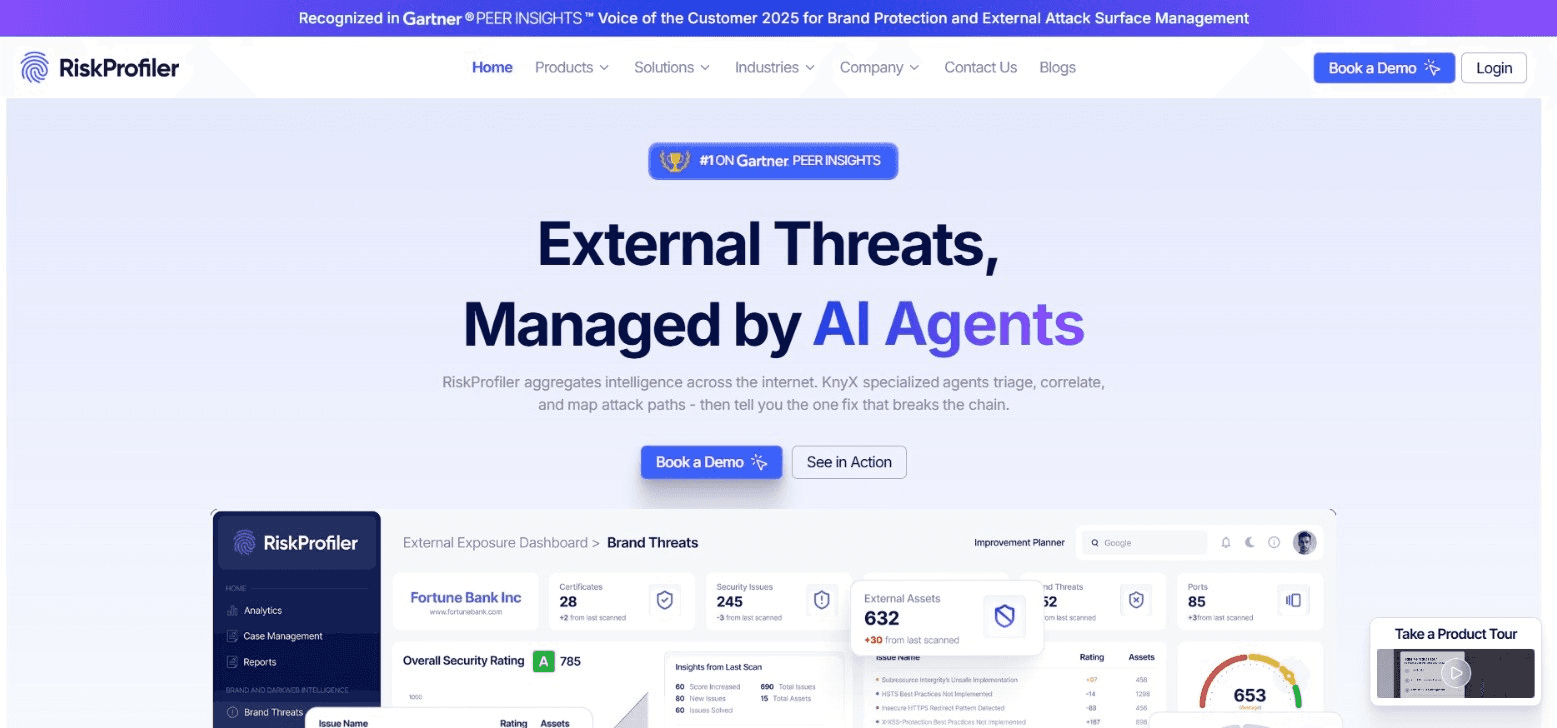
RiskProfiler is a global external threat intelligence and digital risk platform with deployment presence in India through channel partnerships. RiskProfiler Dark Web Monitoring helps organizations detect leaked credentials, impersonation activity, exposed digital assets, and external risks tied to cloud infrastructure, vendors, and publicly accessible attack surfaces.
Company Overview
Founded: 2019
Headquarters: Rock Hill, South Carolina, USA
Employees: 51–200
Certifications: SOC 2, ISO 27001, GDPR
Recognition: Gartner Peer Insights #1 Brand Protection Software (4.9/5)
Key Features:
Unified External Risk Platform: Combines attack surface management, third-party risk, brand monitoring, identity exposure tracking, and cloud exposure visibility in a single dashboard.
Dark Web Monitoring Module: Tracks leaked credentials, stealer logs, phishing domains, impersonation attempts, and publicly exposed sensitive data sources.
Attack Path Analysis: Maps relationships between exposed assets, vendors, and infrastructure to visualize potential attacker pathways.
External Digital Footprint Discovery: Continuously identifies exposed domains, subdomains, APIs, and third-party dependencies across the internet surface.
Pros:
Consolidates multiple external security functions into a single platform.
Provides visibility across dark web exposure and external attack surface risks.
Designed for integration with enterprise security workflows.
Cons:
Depth of coverage varies depending on configuration and data sources enabled.
The platform may require security maturity for effective operational use.
Recommended For: Mid-market and enterprise organizations seeking unified visibility across external attack surface, dark web exposure, and third-party risk within a single security platform.
See how RiskProfiler detects leaked credentials, impersonation activity, and external attack surface exposure across dark web and open internet sources in real time.
2. Cyble (Vision / Hawk)
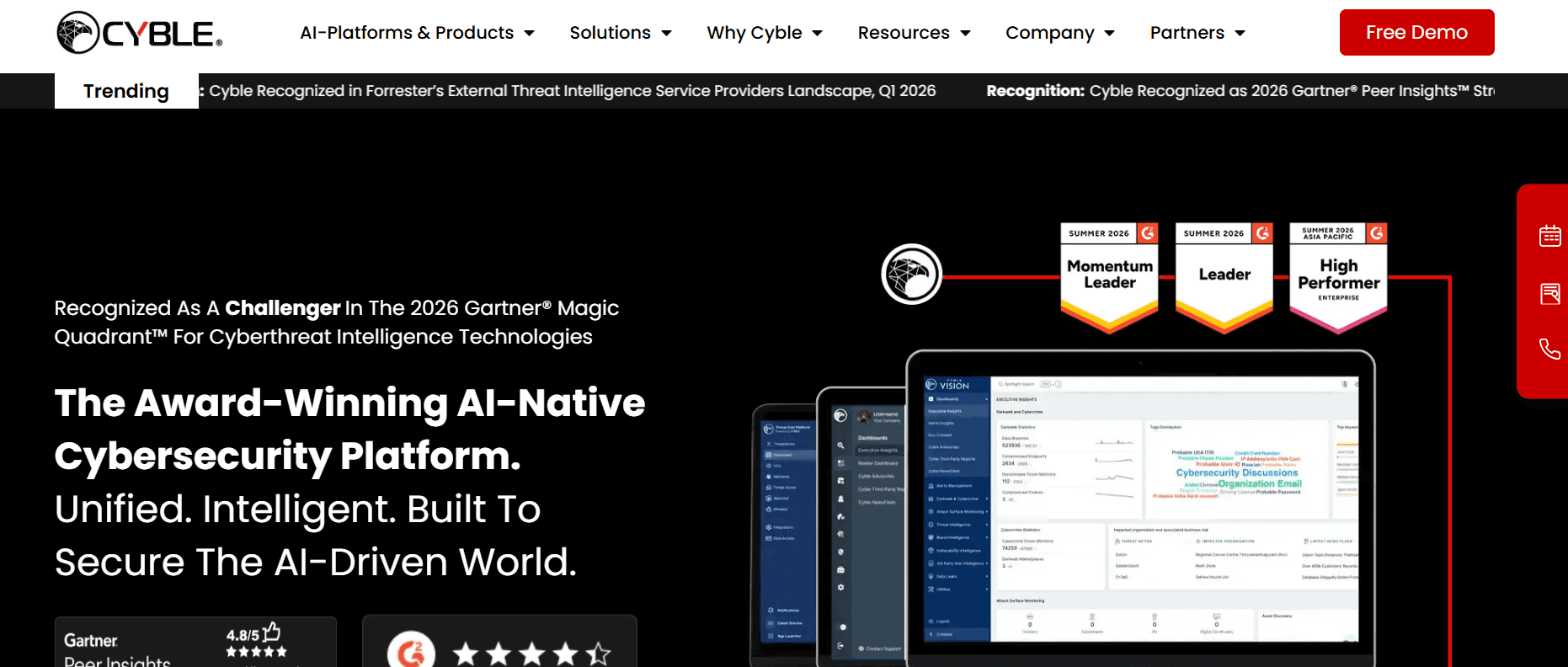
Founded in 2019, Cyble (Vision/Hawk) is a Y Combinator-backed cyber threat intelligence platform used by enterprises. It helps detect leaked credentials, impersonation, and exposed data across deep and dark web sources. The tool focuses on continuous monitoring, AI-assisted analysis, and integration with security operations for faster incident response.
Company Overview
Founded: 2019
Headquarters: Cupertino, California, USA (India operations: Bengaluru and Mumbai)
Employees: 201–500
Certifications: SOC 2 Type II; ISO/IEC 27001
Recognition: Challenger, Gartner Magic Quadrant™ for Cyberthreat Intelligence Technologies 2026
Key Features:
Blaze AI: AI-assisted engine for threat detection, enrichment, and investigation support.
Multi-Source Monitoring: Tracks TOR, Telegram, Discord, ransomware leak sites, forums, and paste sites.
Risk Prioritization: Context-based scoring to help security teams prioritize critical alerts.
Security Integrations: Connects with SIEM, SOAR, DFIR, attack surface, and vulnerability management tools.
Pros:
Strong adoption in enterprise cyber threat intelligence use cases.
Broad coverage across major dark web and cybercrime sources.
High automation support for security teams.
Cons:
Enterprise pricing limits SMB and mid-market adoption.
Requires a mature SOC setup for full operational value.
Recommended For: Large enterprises, BFSI institutions, government bodies, and SOC teams needing structured dark web monitoring and integrated threat intelligence for security operations.
3. CloudSEK (XVigil)
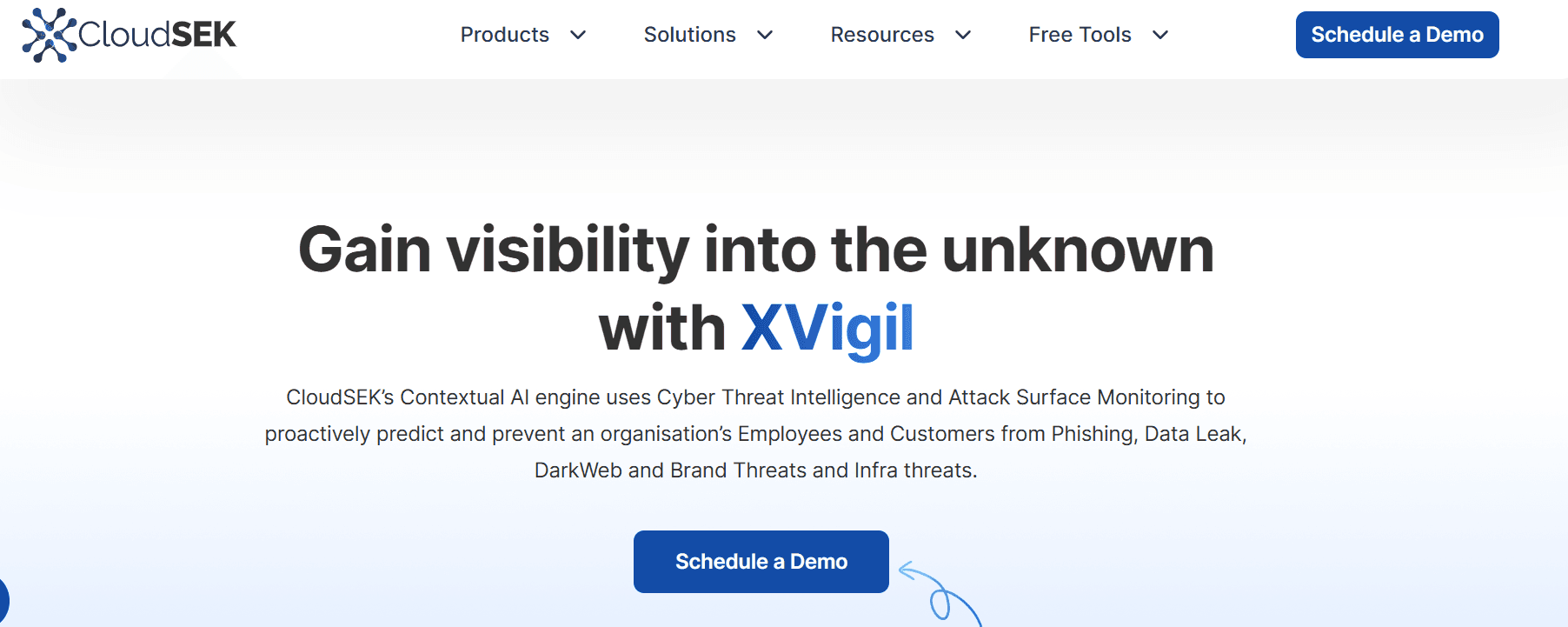
CloudSEK is an India-origin cyber threat intelligence platform that focuses on predictive detection of exposed data across deep and dark web ecosystems. It helps organizations identify leaked credentials, impersonation activity, malicious APKs, exposed APIs, and brand abuse early. It also converts these signals into SOC-ready intelligence for faster response.
Company Overview
Founded: 2015
Headquarters: Singapore
Employees: 51–200
Certifications: Not publicly disclosed
Recognition: First Indian-origin cybersecurity company to receive investment from a U.S. state-backed venture fund
Key Features:
Proprietary Crawlers: Continuously scan open and login-walled forums, marketplaces, paste sites, and dark web sources for leaked credentials, sensitive data, and threat indicators.
Deep & Dark Web Indexing: Maintains TOR and I2P coverage with historical tracking of threat actor behavior, infrastructure, and recurring attack patterns.
Nexus AI Command Center: Correlates threat intelligence, attack surface exposure, and business context into a unified risk view for security teams.
SOC & SIEM Integration: Converts indicators of compromise into structured feeds for SOC workflows, enabling faster triage and incident response.
Pros:
Strong India-centric intelligence coverage with deep BFSI and government adoption.
Early detection of exposed credentials, APIs, and impersonation assets before active exploitation.
Strong operational alignment with SOC teams and incident response workflows.
Cons:
Initial deployment generates high alert volume requiring tuning for relevance.
UI and configuration flexibility are less mature than some global competitors.
Recommended For: Indian BFSI, healthcare, and government organizations needing predictive dark web monitoring, structured threat intelligence, and SOC-integrated response for early exposure detection.
4. TAC Security (ESOF DarkSec)
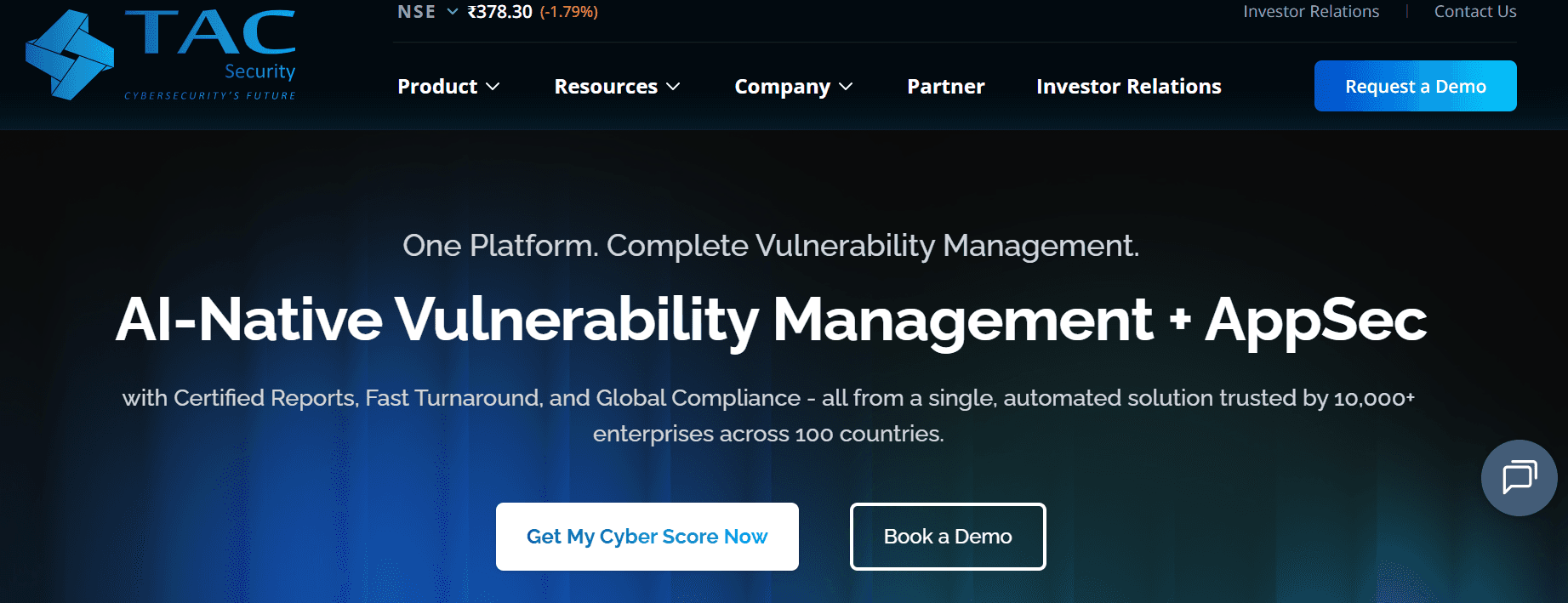
TAC Security is an India-based, NSE-listed cybersecurity company focused on vulnerability management and enterprise security operations through its ESOF platform. Its DarkSec module provides visibility into external and dark web exposure, helping organizations identify leaked credentials, data mentions, and potential security risks tied to their digital footprint.
Company Overview
Founded: 2013
Headquarters: San Francisco, California
Employees: 51–200
Certifications: CREST; PCI DSS Approved Scanning Vendor (ASV); ISO 27001; Google CASA recommended partner; App Defense Alliance member
Recognition: Forbes 30 Under 30 Asia 2018 (Trishneet Arora)
Key Features:
ESOF DarkSec Module: Provides visibility into potential data exposure across dark web sources, including leaked credentials and organizational references.
Dark Web Risk Scoring: Assigns a risk score (0–10) based on observed exposure indicators and severity levels.
Exposure Visibility Reports: Summarizes the nature and relevance of detected leaks for security analysis.
ESOF Platform Integration: Combines vulnerability management, compliance scanning, and external risk monitoring in a unified system.
Pros:
NSE-listed cybersecurity vendor with strong enterprise presence in India.
DarkSec is integrated within a broader security and vulnerability management platform.
Adopted by large enterprises and public sector organizations for risk visibility use cases.
Cons:
Dark web monitoring is a module within a broader platform, not a standalone focus.
Limited publicly detailed information on recent DarkSec-specific enhancements.
Recommended For: Indian enterprises seeking unified vulnerability management with external exposure visibility and compliance-driven security operations.
5. IARM Info (IARM Information Security)

IARM Info is a Chennai-based managed security services provider offering outsourced cybersecurity operations. This includes dark web monitoring, threat intelligence, and compliance-driven security assessments. It operates as a service-led model where monitoring, analysis, and reporting are fully handled by its security team rather than client-managed tools.
Company Overview
Founded: 2016
Headquarters: Chennai, Tamil Nadu, India (offices also in Bengaluru, Mumbai, Singapore, and the USA)
Employees: 51–200
Certifications: CREST-accredited penetration testing
Recognition: CIO Review Top 20 Most Promising Enterprise Information Security Solution Providers 2018
Key Features:
Managed Dark Web Monitoring Service: Provides continuous scanning for leaked credentials, data breach mentions, and organizational exposure without requiring client-side tooling.
Flexible Reporting Cycles: Offers daily, weekly, and monthly threat intelligence reports based on organizational risk requirements.
SOC-Driven Monitoring: A 24/7 security operations center tracks external threats and generates alerts and incident summaries.
Security Tool Integration: Supports integration of monitoring outputs into client SIEM environments for centralized visibility.
Pros:
Fully managed model suitable for organizations without internal SOC or security tooling.
Flexible engagement and reporting options aligned to different budgets and risk levels.
CREST-accredited and compliance-aligned services suitable for regulated environments.
Cons:
Service-led model offers less automation compared to SaaS-based platforms.
Limited visibility into advanced dark web sources like stealer logs or encrypted messaging channels.
Recommended For: Indian SMBs, mid-market organizations, and compliance-focused enterprises seeking outsourced dark web monitoring and managed security operations without building internal SOC infrastructure.
Also Read: Top 5 Dark Web Monitoring Companies in USA to Protect Your Business in 2026
How To Choose The Right Dark Web Monitoring Service In India?
Choosing a dark web monitoring service in India depends on how effectively it can monitor the dark web, detect dark web data exposure, and proactively surface cybercriminal activity affecting personal information, IP addresses, and intellectual property. The right solution should align with the organization’s risk exposure and security maturity, supported by security teams and incident response workflows.
Here’s how you can choose the right solution:
For Startups And SMBs: Focus on basic deep web monitoring that identifies credential leaks, exposed personal information, and vulnerabilities using search engine-based indexing with minimal operational complexity.
For BFSI, Fintech, and RBI/SEBI-Regulated Entities: Require regulated-grade dark web monitoring service with analyst-led validation, incident response readiness, and proactive detection of financial and identity-related exposure.
For Large Enterprises and Government Bodies: Need advanced protection services that include continuous monitoring, IP and intellectual property tracking, and integration with enterprise security teams for large-scale threat response.
For E-Commerce and D2C Brands: Prioritize monitoring focused on cybercriminal marketplaces to detect brand abuse, leaked customer data, and compromised credentials impacting trust and revenue.
Conclusion: Why Is RiskProfiler’s Dark Web Monitoring Important for Organizations in India?
Credential leaks, impersonation activity, phishing campaigns, and exposed data are increasingly surfacing across dark web forums, Telegram channels, marketplaces, and paste sites. As external attack surfaces expand across cloud environments, third-party vendors, domains, and online platforms, organizations need continuous visibility into threats that exist beyond their corporate network. When evaluating dark web monitoring tools and services, organizations should prioritize broad source coverage, real-time detection, automated alerting, and integrations that support SOC and incident response workflows.
RiskProfiler’s dark web monitoring capability tracks leaked credentials, impersonation activity, phishing domains, and exposed organizational data across dark web forums, marketplaces, and underground sources. It correlates these signals with external threat intelligence to help security teams identify, validate, and prioritize exposure across their digital footprint.
Explore how RiskProfiler helps organizations strengthen dark web visibility and respond faster to emerging threats through a personalized demo.
Credential leaks, impersonation activity, and stolen data are constantly surfacing across dark web forums and Telegram channels tied to real organizations. Most of the teams discover exposure only after it has already spread. This article breaks down the top 5 dark web monitoring companies in India, their capabilities, evaluation criteria, and how to choose the right solution for your business.
At a Glance
RiskProfiler: External threat intelligence, dark web monitoring, and attack surface exposure management
Cyble: Cyber threat intelligence platform with AI-driven dark web monitoring
CloudSEK XVigil: Predictive cyber threat intelligence with deep and dark web monitoring
TAC Security (ESOF DarkSec): Vulnerability management platform with external exposure and dark web risk visibility
IARM Info: Managed security services provider offering outsourced dark web monitoring
What Is Dark Web Monitoring?
Dark web monitoring is a cybersecurity process that uses a dark web monitoring tool or dark web monitoring solution. It continuously scans the dark web, Tor networks, paste sites, and dark web marketplaces for leaked credentials, PII, or data breach indicators. It generates real-time alerts when compromised data or identity information appears, enabling cybersecurity teams to act on cyber threat intelligence and prevent further exploitation.
Core Capabilities Of A Dark Web Monitoring Platform
A modern dark web monitoring platform provides continuous monitoring across the deep web, Tor networks, and hidden online sources to detect leaked credentials, sensitive data exposure, and attack surface risks. It uses external threat intelligence and automated scanning to identify cyber threats early and strengthen digital risk protection across enterprise environments.
Here are the capabilities of dark web monitoring:
Stolen Credential And Stealer Log Detection: Continuously scans the dark web to identify leaked credentials, passwords, and stealer logs tied to compromised accounts and indicators of compromise from data breach activity.
Telegram and IRC Channel Monitoring: Tracks threat actors across Telegram and Discord channels to detect emerging threats, cyber threat discussions, and sensitive data trading in real time.
Ransomware Leak Site and Dark Forum Surveillance: Monitors ransomware leak sites and underground forums to deliver dark web threat intelligence on extortion campaigns and exposed organizational data.
Brand Abuse and Executive Impersonation Monitoring: Provides brand monitoring across hidden online ecosystems to detect impersonation attempts, executive fraud, and misuse of digital footprint assets.
Fake Domain And Phishing Site Detection: Identifies phishing infrastructure using crawlers and threat intelligence feeds to detect fraudulent domains and protect external attack surface exposure.
Takedown Services For Leaked Data And Fraudulent Assets: Enables takedown actions across dark web marketplaces and paste sites to remove leaked sensitive data and reduce cyber risk exposure.
SIEM, API, and SOC Workflow Integration: Integrates with SIEM systems and SOC workflows to operationalize alerts from a threat intelligence platform and automate remediation actions across security tools.
CERT-In Empanelment and DPDPA Compliance Support: Supports regulatory alignment for financial institutions by mapping findings to compliance frameworks and ensuring a structured response to data breach events.
Criteria Used To Shortlist Dark Web Monitoring Vendors For India
Vendors offering deep and dark web monitoring were evaluated based on their ability to deliver continuous visibility into dark web activity. This includes leaks on Tor, paste sites, and underground channels. Priority was given to solutions that provide advanced dark web monitoring, strong automation, and actionable threat intelligence capability.
Here’s how the dark web intelligence tools are evaluated:
AI/ML Automation and Detection Depth: Assessed automated monitoring strength, including how effectively platforms use HTTPS, crawlers, and threat intel feeds to detect emerging threats and reduce manual intervention.
India Presence, Indian Clientele, or India-Specific Coverage: Evaluated relevance for Indian enterprises, including local deployments, compliance alignment, and ability to ensure data does not end up on the dark without detection.
Source Coverage Breadth - TOR, Paste Sites, Telegram, Marketplaces: Measured visibility into dark web sources such as Tor networks, telegram channels, marketplaces, and paste sites for comprehensive dark web monitoring continuously scans coverage.
Takedown Track Record and Enforcement Speed: Reviewed effectiveness in remediation workflows, including takedown execution speed for leaked data, compromised credentials, and malicious content across dark web environments.
5 Best Dark Web Monitoring Solutions in India
Not all dark web monitoring products deliver the same level of visibility, investigation depth, or response capability. Some focus on enterprise threat intelligence, others prioritize compliance, managed monitoring, brand abuse detection, or consumer identity protection. This list covers the 5 dark web monitoring solutions used in India to surface exposure early, track cybercriminal activity, and enable faster response across hidden digital ecosystems.
Platform | Best At | Standout Capability |
RiskProfiler | Unified external threat exposure management | Single platform combining dark web monitoring, EASM, TPRM, and attack path visualization |
Cyble | AI-native dark web threat intelligence | Blaze AI agentic engine with automated investigation across TOR, Telegram, ransomware leak sites, and paste sites |
CloudSEK XVigil | Predictive dark web monitoring for Indian enterprises | Proprietary crawlers scanning login-walled dark forums with a historical data lake for threat actor tracking |
TAC Security (ESOF DarkSec) | Vulnerability-led dark web intelligence | Quantified dark web organization risk score (0–10) mapped to exploitable vulnerabilities |
IARM Info | Fully managed dark web scanning services | Flexible daily/weekly/monthly reporting with SIEM integration - zero client-side tooling required |
1. RiskProfiler
RiskProfiler is a global external threat intelligence and digital risk platform with deployment presence in India through channel partnerships. RiskProfiler Dark Web Monitoring helps organizations detect leaked credentials, impersonation activity, exposed digital assets, and external risks tied to cloud infrastructure, vendors, and publicly accessible attack surfaces.
Company Overview
Founded: 2019
Headquarters: Rock Hill, South Carolina, USA
Employees: 51–200
Certifications: SOC 2, ISO 27001, GDPR
Recognition: Gartner Peer Insights #1 Brand Protection Software (4.9/5)
Key Features:
Unified External Risk Platform: Combines attack surface management, third-party risk, brand monitoring, identity exposure tracking, and cloud exposure visibility in a single dashboard.
Dark Web Monitoring Module: Tracks leaked credentials, stealer logs, phishing domains, impersonation attempts, and publicly exposed sensitive data sources.
Attack Path Analysis: Maps relationships between exposed assets, vendors, and infrastructure to visualize potential attacker pathways.
External Digital Footprint Discovery: Continuously identifies exposed domains, subdomains, APIs, and third-party dependencies across the internet surface.
Pros:
Consolidates multiple external security functions into a single platform.
Provides visibility across dark web exposure and external attack surface risks.
Designed for integration with enterprise security workflows.
Cons:
Depth of coverage varies depending on configuration and data sources enabled.
The platform may require security maturity for effective operational use.
Recommended For: Mid-market and enterprise organizations seeking unified visibility across external attack surface, dark web exposure, and third-party risk within a single security platform.
See how RiskProfiler detects leaked credentials, impersonation activity, and external attack surface exposure across dark web and open internet sources in real time.
2. Cyble (Vision / Hawk)
Founded in 2019, Cyble (Vision/Hawk) is a Y Combinator-backed cyber threat intelligence platform used by enterprises. It helps detect leaked credentials, impersonation, and exposed data across deep and dark web sources. The tool focuses on continuous monitoring, AI-assisted analysis, and integration with security operations for faster incident response.
Company Overview
Founded: 2019
Headquarters: Cupertino, California, USA (India operations: Bengaluru and Mumbai)
Employees: 201–500
Certifications: SOC 2 Type II; ISO/IEC 27001
Recognition: Challenger, Gartner Magic Quadrant™ for Cyberthreat Intelligence Technologies 2026
Key Features:
Blaze AI: AI-assisted engine for threat detection, enrichment, and investigation support.
Multi-Source Monitoring: Tracks TOR, Telegram, Discord, ransomware leak sites, forums, and paste sites.
Risk Prioritization: Context-based scoring to help security teams prioritize critical alerts.
Security Integrations: Connects with SIEM, SOAR, DFIR, attack surface, and vulnerability management tools.
Pros:
Strong adoption in enterprise cyber threat intelligence use cases.
Broad coverage across major dark web and cybercrime sources.
High automation support for security teams.
Cons:
Enterprise pricing limits SMB and mid-market adoption.
Requires a mature SOC setup for full operational value.
Recommended For: Large enterprises, BFSI institutions, government bodies, and SOC teams needing structured dark web monitoring and integrated threat intelligence for security operations.
3. CloudSEK (XVigil)
CloudSEK is an India-origin cyber threat intelligence platform that focuses on predictive detection of exposed data across deep and dark web ecosystems. It helps organizations identify leaked credentials, impersonation activity, malicious APKs, exposed APIs, and brand abuse early. It also converts these signals into SOC-ready intelligence for faster response.
Company Overview
Founded: 2015
Headquarters: Singapore
Employees: 51–200
Certifications: Not publicly disclosed
Recognition: First Indian-origin cybersecurity company to receive investment from a U.S. state-backed venture fund
Key Features:
Proprietary Crawlers: Continuously scan open and login-walled forums, marketplaces, paste sites, and dark web sources for leaked credentials, sensitive data, and threat indicators.
Deep & Dark Web Indexing: Maintains TOR and I2P coverage with historical tracking of threat actor behavior, infrastructure, and recurring attack patterns.
Nexus AI Command Center: Correlates threat intelligence, attack surface exposure, and business context into a unified risk view for security teams.
SOC & SIEM Integration: Converts indicators of compromise into structured feeds for SOC workflows, enabling faster triage and incident response.
Pros:
Strong India-centric intelligence coverage with deep BFSI and government adoption.
Early detection of exposed credentials, APIs, and impersonation assets before active exploitation.
Strong operational alignment with SOC teams and incident response workflows.
Cons:
Initial deployment generates high alert volume requiring tuning for relevance.
UI and configuration flexibility are less mature than some global competitors.
Recommended For: Indian BFSI, healthcare, and government organizations needing predictive dark web monitoring, structured threat intelligence, and SOC-integrated response for early exposure detection.
4. TAC Security (ESOF DarkSec)
TAC Security is an India-based, NSE-listed cybersecurity company focused on vulnerability management and enterprise security operations through its ESOF platform. Its DarkSec module provides visibility into external and dark web exposure, helping organizations identify leaked credentials, data mentions, and potential security risks tied to their digital footprint.
Company Overview
Founded: 2013
Headquarters: San Francisco, California
Employees: 51–200
Certifications: CREST; PCI DSS Approved Scanning Vendor (ASV); ISO 27001; Google CASA recommended partner; App Defense Alliance member
Recognition: Forbes 30 Under 30 Asia 2018 (Trishneet Arora)
Key Features:
ESOF DarkSec Module: Provides visibility into potential data exposure across dark web sources, including leaked credentials and organizational references.
Dark Web Risk Scoring: Assigns a risk score (0–10) based on observed exposure indicators and severity levels.
Exposure Visibility Reports: Summarizes the nature and relevance of detected leaks for security analysis.
ESOF Platform Integration: Combines vulnerability management, compliance scanning, and external risk monitoring in a unified system.
Pros:
NSE-listed cybersecurity vendor with strong enterprise presence in India.
DarkSec is integrated within a broader security and vulnerability management platform.
Adopted by large enterprises and public sector organizations for risk visibility use cases.
Cons:
Dark web monitoring is a module within a broader platform, not a standalone focus.
Limited publicly detailed information on recent DarkSec-specific enhancements.
Recommended For: Indian enterprises seeking unified vulnerability management with external exposure visibility and compliance-driven security operations.
5. IARM Info (IARM Information Security)
IARM Info is a Chennai-based managed security services provider offering outsourced cybersecurity operations. This includes dark web monitoring, threat intelligence, and compliance-driven security assessments. It operates as a service-led model where monitoring, analysis, and reporting are fully handled by its security team rather than client-managed tools.
Company Overview
Founded: 2016
Headquarters: Chennai, Tamil Nadu, India (offices also in Bengaluru, Mumbai, Singapore, and the USA)
Employees: 51–200
Certifications: CREST-accredited penetration testing
Recognition: CIO Review Top 20 Most Promising Enterprise Information Security Solution Providers 2018
Key Features:
Managed Dark Web Monitoring Service: Provides continuous scanning for leaked credentials, data breach mentions, and organizational exposure without requiring client-side tooling.
Flexible Reporting Cycles: Offers daily, weekly, and monthly threat intelligence reports based on organizational risk requirements.
SOC-Driven Monitoring: A 24/7 security operations center tracks external threats and generates alerts and incident summaries.
Security Tool Integration: Supports integration of monitoring outputs into client SIEM environments for centralized visibility.
Pros:
Fully managed model suitable for organizations without internal SOC or security tooling.
Flexible engagement and reporting options aligned to different budgets and risk levels.
CREST-accredited and compliance-aligned services suitable for regulated environments.
Cons:
Service-led model offers less automation compared to SaaS-based platforms.
Limited visibility into advanced dark web sources like stealer logs or encrypted messaging channels.
Recommended For: Indian SMBs, mid-market organizations, and compliance-focused enterprises seeking outsourced dark web monitoring and managed security operations without building internal SOC infrastructure.
Also Read: Top 5 Dark Web Monitoring Companies in USA to Protect Your Business in 2026
How To Choose The Right Dark Web Monitoring Service In India?
Choosing a dark web monitoring service in India depends on how effectively it can monitor the dark web, detect dark web data exposure, and proactively surface cybercriminal activity affecting personal information, IP addresses, and intellectual property. The right solution should align with the organization’s risk exposure and security maturity, supported by security teams and incident response workflows.
Here’s how you can choose the right solution:
For Startups And SMBs: Focus on basic deep web monitoring that identifies credential leaks, exposed personal information, and vulnerabilities using search engine-based indexing with minimal operational complexity.
For BFSI, Fintech, and RBI/SEBI-Regulated Entities: Require regulated-grade dark web monitoring service with analyst-led validation, incident response readiness, and proactive detection of financial and identity-related exposure.
For Large Enterprises and Government Bodies: Need advanced protection services that include continuous monitoring, IP and intellectual property tracking, and integration with enterprise security teams for large-scale threat response.
For E-Commerce and D2C Brands: Prioritize monitoring focused on cybercriminal marketplaces to detect brand abuse, leaked customer data, and compromised credentials impacting trust and revenue.
Conclusion: Why Is RiskProfiler’s Dark Web Monitoring Important for Organizations in India?
Credential leaks, impersonation activity, phishing campaigns, and exposed data are increasingly surfacing across dark web forums, Telegram channels, marketplaces, and paste sites. As external attack surfaces expand across cloud environments, third-party vendors, domains, and online platforms, organizations need continuous visibility into threats that exist beyond their corporate network. When evaluating dark web monitoring tools and services, organizations should prioritize broad source coverage, real-time detection, automated alerting, and integrations that support SOC and incident response workflows.
RiskProfiler’s dark web monitoring capability tracks leaked credentials, impersonation activity, phishing domains, and exposed organizational data across dark web forums, marketplaces, and underground sources. It correlates these signals with external threat intelligence to help security teams identify, validate, and prioritize exposure across their digital footprint.
Explore how RiskProfiler helps organizations strengthen dark web visibility and respond faster to emerging threats through a personalized demo.
Jump to
Share Article
We Have Answers!
Explore our FAQ to learn more about how RiskProfiler can help safeguard your digital assets and manage risks efficiently.
How does a dark web monitoring service detect leaked data that is not indexed by search engines?
It uses automated crawlers, threat intel feeds, and machine learning models to scan hidden networks like Tor, darknet marketplaces, and paste sites where traditional search engines do not index data.
What makes enterprise-grade dark web monitoring different from basic breach alert tools?
Enterprise solutions provide continuous monitoring, analyst validation, and integration with incident response systems, rather than simple notifications based on known breach databases. Platforms like RiskProfiler follow this approach by combining dark web monitoring with external threat intelligence and exposure analysis to support security operations.
Can dark web monitoring help prevent attacks or only detect them after a breach?
It primarily focuses on early detection of exposed credentials, vulnerabilities, and cybercriminal activity. This enables proactive remediation before those assets are exploited. Solutions such as RiskProfiler help organizations identify and prioritize exposure early through continuous monitoring of dark web and external threat sources.
How important is local compliance when selecting a dark web monitoring provider in India?
It is critical for regulated sectors, as providers aligned with frameworks like CERT-In and DPDPA, to ensure that monitoring, reporting, and data handling meet legal and audit requirements.
Latest Insights
Stay informed with expert perspectives on cybersecurity, attack surface management,
and building digital resilience.



Enterprise-Grade Security & Trust
Specialized intelligence agents working together toprotect your organization
Ready to Transform
Your Threat Management?
Join hundreds of security teams who trust KnyX to cut through the noise and focus on what matters most.
Book a Demo Today