
Top 5 Dark Web Monitoring Companies in USA to Protect Your Business in 2026
Top 5 Dark Web Monitoring Companies in USA to Protect Your Business in 2026
Stolen credentials and ransomware leaks can expose your business before detection. Compare the top dark web monitoring companies in the USA for 2026.
Read Time
7 min read
Posted On
Social Media
Credential theft no longer begins with a phishing email. Today, stolen passwords, session tokens, and corporate access are routinely sold through infostealer logs, ransomware leak sites, and underground marketplaces long before organizations realize they have been exposed. As security teams look for earlier warning signs of compromise, dark web monitoring has become an important capability for identifying leaked assets and emerging threats. This article compares 5 leading dark web monitoring companies in the USA for 2026.
At a Glance
RiskProfiler: Dark web monitoring, external threat exposure management, and brand protection
SpyCloud: Recaptured credential intelligence and account takeover prevention
Recorded Future: Threat intelligence and external threat visibility
CrowdStrike Falcon Intelligence Recon: Dark web intelligence and identity-linked remediation
ZeroFox: Digital risk protection and executive threat intelligence
What Is Dark Web Monitoring and Why Do US Businesses Need It in 2026?
Dark web monitoring is a cybersecurity practice that scans dark web forums, ransomware leak sites, and underground marketplaces for exposed credentials, leaked databases, email addresses, and personally identifiable information (PII). A dark web monitoring service helps businesses identify compromised credentials and data breach exposure before threat actors use the information for phishing, ransomware, or account takeover attacks.
A reliable dark web monitoring solution is a crucial element in the cybersecurity portfolio of a US-based business in 2026 because infostealer malware, Initial Access Brokers (IABs), and ransomware groups now operate as organized cybercriminal ecosystems. They actively trade stolen VPN access, authentication tokens, and corporate data.
How Does Dark Web Monitoring Work?
Dark web scanning tools and dark web scanning services automate real-time scans across dark web sites, breach databases, Telegram channels, and hacker marketplaces. They help detect leaked credentials, domain mentions, API keys, or exposed corporate records linked to a business. Modern dark web monitoring solutions integrate with threat intelligence platforms, SIEM tools, and incident response workflows to automate alert generation and remediation.
Common Dark Web Threats Targeting US Businesses
Infostealer malware steals passwords, browser cookies, and authentication tokens. IBM's X-Force Threat Intelligence Index 2025 reported a 12% increase in infostealer credentials advertised on dark web marketplaces, highlighting the growing role of credential theft in cyberattacks.
Initial Access Brokers (IABs) selling compromised VPN, RDP, and SaaS access.
Ransomware groups leaking stolen databases during double-extortion attacks. According to Verizon's 2026 Data Breach Investigations Report (DBIR), 48% of all breaches now involve ransomware.
Phishing kits targeting employee email addresses and MFA sessions.
Cybercriminal marketplaces trading credit card numbers, PII, and corporate credentials.
Key Features to Look for in a Dark Web Monitoring Platform
US businesses need dark web threat intelligence solutions to help security teams reduce detection time, strengthen online security, and proactively contain breach exposure.
The following features define enterprise-grade dark web intelligence tools:
Comprehensive Source Coverage: Monitors ransomware leak sites, Telegram channels, criminal forums, paste sites, private chat rooms, and onion marketplaces where cybercriminals trade dark web data and stolen access.
Infostealer Intelligence: Detects RedLine, Lumma, Vidar, and Raccoon-sourced credentials, browser cookies, and authentication tokens stolen from employee systems and virtual private network accounts.
Real-Time Alerting: Provides even low-latency alerts when leaked credentials, exposed domains, or compromised accounts appear across monitored dark web sources.
Threat Context and IOC Enrichment: Maps threat actor TTPs, indicators of compromise, and ransomware activity using frameworks such as MITRE ATT&CK.
Security Stack Integration: Connects with SIEM, SOAR, EDR, IAM, and attack surface management platforms to automate remediation and active monitoring workflows.
Compliance and Analyst Support: Includes SOC 2 Type II or ISO 27001 compliance alongside multilingual analyst support for enterprise breach investigations and digital risk protection.
Top 5 Dark Web Monitoring Vendors in the USA in 2026
Businesses searching for the top dark web monitoring firms in the USA typically compare detection accuracy, ransomware visibility, stealer log coverage, analyst support, integrations, and enterprise scalability. The dark web monitoring platforms listed below are widely recognized for helping organizations identify leaked credentials, exposed corporate data, and active dark web threats.
Platform | Best At | Standout Capability |
RiskProfiler | Unified dark web, EASM, and brand protection | Agentic AI threat prioritization and dark web monitoring |
SpyCloud | Recaptured credential intelligence | Plaintext password cracking from infostealer-recaptured data |
Recorded Future | Enterprise threat intelligence | Insikt Group analyst-curated dark web reports |
CrowdStrike Falcon Intelligence Recon | Integrated dark web and EDR remediation | Auto credential remediation through Falcon Identity Protection |
ZeroFox | Operative-led dark web access | Dark Ops covert operatives inside invite-only forums |
1. RiskProfiler
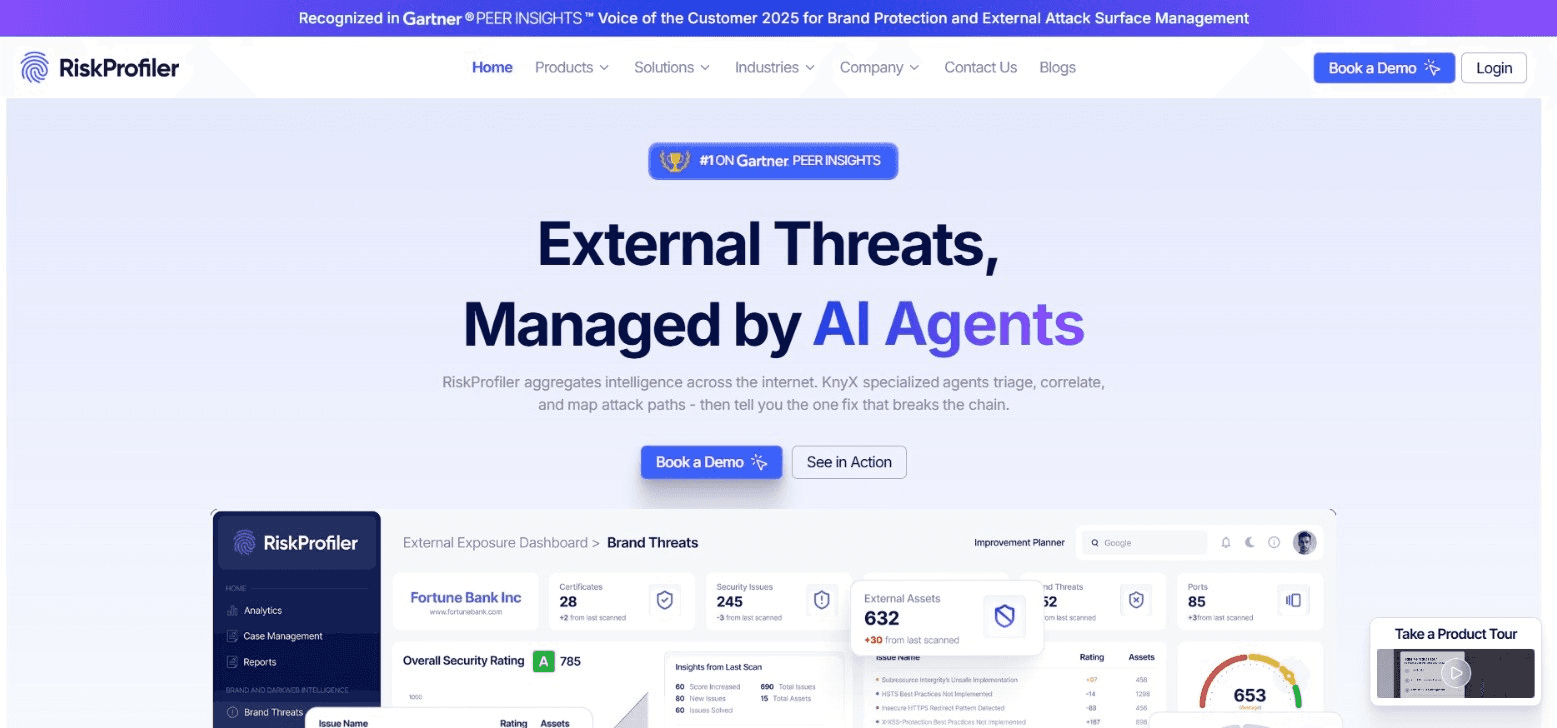
RiskProfiler is a South Carolina-based external threat exposure management platform founded in 2019. The company combines dark web monitoring, external attack surface management, brand protection, and threat intelligence through its KnyX AI platform. They help enterprises identify exposed credentials, ransomware threats, phishing infrastructure, and external attack paths from a unified interface.
Company Overview
Founded: 2019
Headquarters: Rock Hill, South Carolina, USA
Employees: 51–200
Certifications: SOC 2, ISO 27001, GDPR
Recognition: Gartner Peer Insights #1 Brand Protection Software (4.9/5)
Key Features:
Dark Web and Stealer Log Monitoring: RiskProfiler Dark Web Monitoring tracks ransomware leak sites, Telegram channels, underground forums, TOR services, and stealer malware logs for exposed credentials and leaked corporate data.
AI-Powered Threat Prioritization: KnyX AI correlates exposure signals, attack paths, and external risks to prioritize higher-risk threats and reduce alert fatigue for security operations teams.
Unified Exposure Management: The platform correlates dark web intelligence,, brand protection, external threat exposure management, and TPRM within a centralized operational interface instead of separate security tools. It also maps the leaked credentials with the external exposures, supply chain risks, cloud exposures, and vulnerabilities, simulating a real-life attack path for efficient prioritization.
Rapid Deployment and Integrations: RiskProfiler supports deployment in approximately thirty minutes and integrates with Splunk, Microsoft Sentinel, Jira, ServiceNow, Slack, and SOAR workflows.
Pros
Fast deployment and onboarding
Unified external exposure visibility
AI-assisted threat prioritization
Cons
Enterprise-oriented pricing model
Less suited for SMB-focused operations
Recommended For: Enterprise security teams needing unified dark web monitoring, external attack surface visibility, brand protection, and AI-prioritized remediation workflows from a centralized platform.
Book a demo now to explore how RiskProfiler helps security teams monitor credential exposure, ransomware leak sites, and emerging dark web threats.
2. SpyCloud
SpyCloud is an Austin-based identity threat protection company specializing in recapturing darknet intelligence and malware-exposed credential remediation. Founded in 2016, the platform helps enterprises detect account takeover risks using infostealer telemetry. It also uses plaintext password recovery, session cookie monitoring, and automated IAM-integrated remediation workflows powered by large-scale darknet exposure data.
Company Overview
Founded: 2016
Headquarters: Austin, Texas, USA
Employees: 201–500
Certifications: Not publicly disclosed
Recognition: Recognized in Gartner Peer Insights customer reviews for Security Threat Intelligence
Key Features
Recaptured Darknet Intelligence: SpyCloud collects stolen credentials directly from criminal ecosystems before public marketplace distribution. It improves exposure freshness, attribution reliability, and enterprise remediation timelines for compromised accounts.
Infostealer Malware Monitoring: The platform tracks RedLine, Vidar, Lumma, and Raccoon infostealer infections to identify stolen credentials, browser cookies, autofill records, and authentication tokens from compromised endpoints.
Session Token Exposure Detection: SpyCloud monitors exposed session cookies and authentication tokens associated with MFA bypass activity. This enables earlier detection of active account hijacking and persistence attempts.
Automated Identity Remediation: Native integrations with Okta, Microsoft Entra ID, Splunk, and Microsoft Sentinel automate password resets, account lockdowns, SIEM alerting, and IAM-driven remediation workflows.
Pros
Large recaptured credential dataset
Plaintext password cracking capabilities
Strong IAM and SIEM integrations
Cons
Enterprise-focused pricing structure
Limited brand abuse monitoring coverage
Recommended For: Enterprise security teams and identity protection providers requiring automated account takeover prevention using malware-sourced credential intelligence, session token monitoring, and IAM-driven remediation workflows.
3. Recorded Future
Recorded Future is a Somerville, Massachusetts-based threat intelligence company founded in 2009 and acquired by Mastercard in 2024. The platform provides dark web monitoring, external threat intelligence, and attack surface visibility by correlating more than 200 billion indexed data points across open, technical, deep, and dark web sources monitored globally.
Company Overview
Founded: 2009
Headquarters: Somerville, Massachusetts, USA
Employees: 1,001–5,000
Certifications: Not publicly disclosed
Recognition: Forrester Wave Leader for External Threat Intelligence Service Providers (2024)
Key Features:
Intelligence Graph Correlation: Recorded Future correlates threat intelligence across large-scale indexed datasets to identify ransomware activity, exposed credentials, malicious infrastructure, and relationships between threat actors and campaigns.
Insikt Group Threat Research: The Insikt Group research division publishes analyst-curated intelligence on ransomware groups, nation-state operations, cybercriminal ecosystems, and emerging attack techniques targeting enterprises and government organizations.
AI-Assisted Threat Hunting: Autonomous Threat Operations supports continuous AI-assisted threat hunting and investigation workflows for identifying suspicious infrastructure, exposed credentials, indicators of compromise, and evolving attack activity.
Multi-Language Dark Web Coverage: The platform monitors open, deep, and dark web environments across more than twelve languages. It improves visibility into regional threat actor communities and underground marketplaces.
Pros
Mature analyst-driven threat intelligence
Extensive SIEM, SOAR, and EDR integrations
Strong enterprise and government adoption
Cons
Requires experienced threat intelligence teams
Modular licensing can increase total platform cost
Recommended For: Large enterprises and government agencies needing analyst-driven threat intelligence, multi-language dark web visibility, and enterprise-scale monitoring beyond standalone dark web exposure detection.
4. CrowdStrike Falcon Intelligence Recon
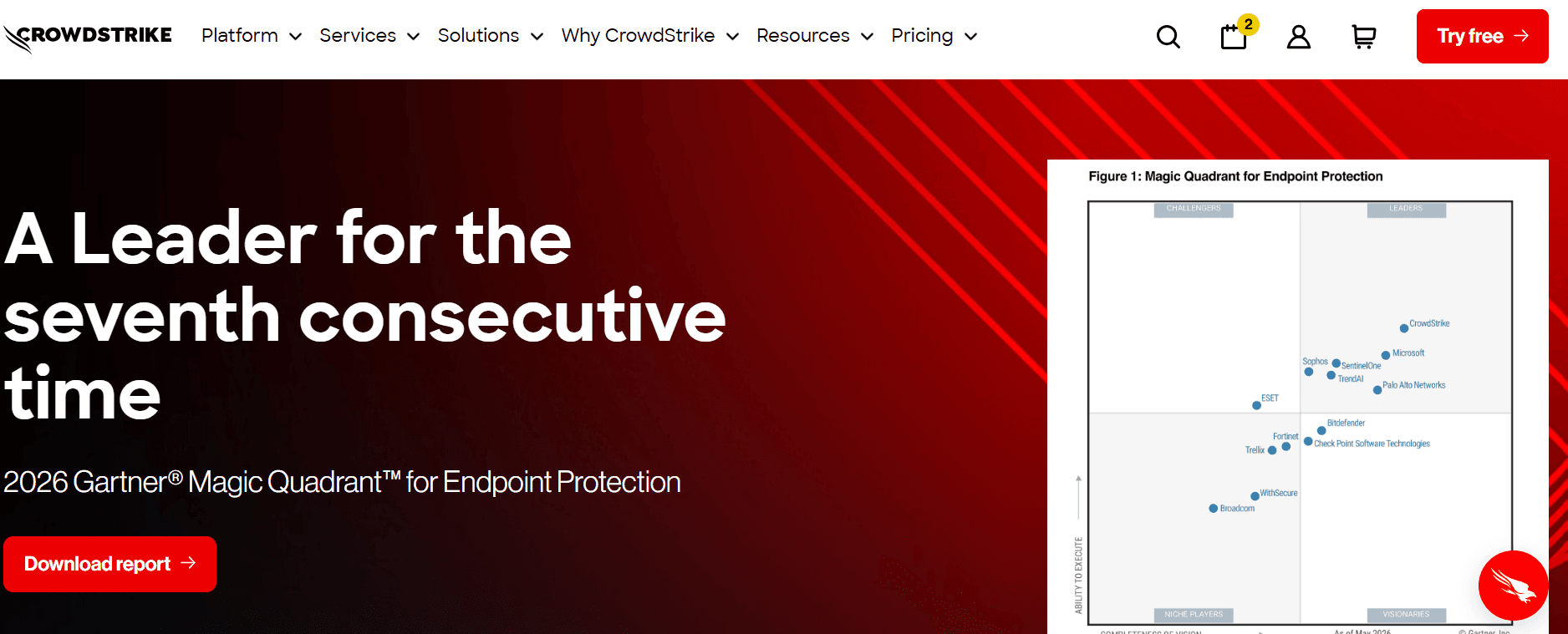
CrowdStrike Falcon Intelligence Recon is the dark web monitoring and threat intelligence module within the CrowdStrike Falcon platform. Backed by CrowdStrike’s Counter Adversary Operations team, the platform helps enterprises identify credential exposure, ransomware activity, and cybercriminal threats. It also assists in connecting intelligence with Falcon identity and endpoint security workflows.
Company Overview
Founded: 2011 (CrowdStrike)
Headquarters: Austin, Texas, USA
Employees: 5,001–10,000
Certifications: SOC 2 Type II, ISO 27001 (CrowdStrike Falcon platform)
Recognition: Gartner Magic Quadrant Leader for Endpoint Protection Platforms (multiple consecutive years)
Key Features:
Identity-Integrated Remediation: Falcon Intelligence Recon integrates with Falcon Identity Protection to support automated credential remediation workflows following compromised credential exposure and account risk detection.
Dark Web and Social Monitoring: The platform provides monitoring across dark web forums, ransomware leak sites, Telegram channels, online marketplaces, and social media platforms for exposure detection and threat tracking.
Threat Actor Attribution: CrowdStrike maps malicious activity to tracked adversary groups using its Bear, Panda, Spider, and related threat actor naming taxonomy for operational intelligence context.
Recon+ Analyst Services: Recon+ delivers analyst-managed investigations, curated intelligence reporting, and finished threat analysis for organizations requiring deeper visibility into cybercriminal operations and exposure events.
Pros
Strong Falcon ecosystem integration
Identity-linked remediation workflows
Mature adversary attribution intelligence
Cons
Greater value for existing Falcon users
Deployment configuration can be complex
Recommended For: Enterprises already using the CrowdStrike Falcon platform that need dark web intelligence connected to identity protection, endpoint detection, and enterprise remediation workflows.
5. ZeroFox
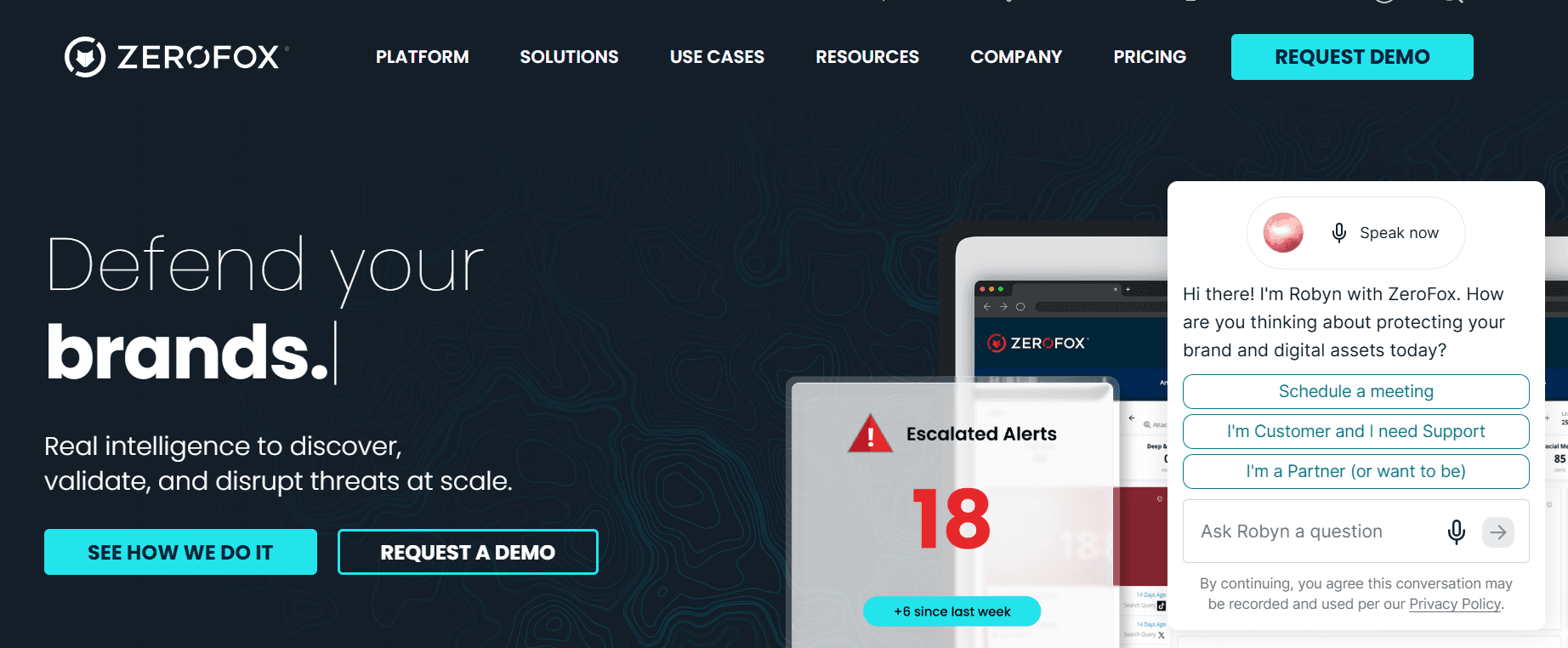
ZeroFox is a Baltimore-based digital risk protection and external threat intelligence company founded in 2013 and acquired by Haveli Investments in 2024. The platform combines dark web monitoring, social media intelligence, executive protection, and brand impersonation defense using analyst-led investigations, automated threat detection, and large-scale intelligence correlation capabilities.
Company Overview
Founded: 2013
Headquarters: Baltimore
Employees: 501–1,000
Certifications: SOC 1, SOC 2 Type II
Recognition: $14M FBI social media intelligence contract (2020)
Key Features:
Analyst-Led Dark Web Intelligence: ZeroFox supports intelligence collection from restricted forums, encrypted channels, and underground communities through analyst-led operations with visibility beyond standard automated crawling approaches.
Credential Exposure Monitoring: The platform monitors stealer logs, combo lists, paste sites, and underground marketplaces to identify leaked credentials, compromised employee accounts, and exposed corporate data.
Intelligence Correlation Engine: ZeroFox correlates threat intelligence signals across billions of indexed data points to identify relationships between threat actors, impersonation campaigns, exposed assets, and malicious infrastructure.
Unified Digital Risk Protection: The platform combines dark web monitoring, social media intelligence, executive protection, and brand impersonation detection within a centralized digital risk protection environment.
Pros
Strong analyst-led intelligence operations
Broad social and brand threat visibility
Proven enterprise and government adoption
Cons
Analyst-driven takedowns may increase response time
Marketplace enforcement narrower than dedicated anti-counterfeit platforms
Recommended For: Mid-to-large enterprises and government agencies requiring analyst-led dark web intelligence, executive protection, social media monitoring, and centralized digital risk protection capabilities.
Also Read: 5 Best Dark Web Monitoring Tools & Services in India in 2026
How to Choose the Right Dark Web Monitoring Providers?
Choosing the best dark web monitoring providers requires more than comparing alert counts or pricing tiers. Businesses should evaluate how effectively the provider detects leaked credentials, monitors criminal ecosystems, supports incident response, and integrates with existing cybersecurity operations.
The factors below help identify enterprise-grade dark web monitoring services:
Threat Profile Alignment: Choose a platform built for your primary risks, such as credential leaks, brand monitoring, executive exposure, or intellectual property theft.
Criminal Source and Stealer Feed Coverage: Audit whether the vendor actively monitors the dark web across ransomware leak sites, Telegram channels, criminal forums, and stealer log feeds.
Detection Speed Over Alert Volume: Prioritize platforms that enable fast exposure detection and actionable alerts over thousands of unactionable notifications.
Managed vs Self-Managed Operations: Select managed protection services if your internal SOC lacks analysts for 24/7 dark web scan investigations and remediation workflows.
Native SIEM, SOAR, and IAM Integration: Verify native integration with SIEM, SOAR, IAM, EDR, and external attack surface management security tools.
Proof of Monitoring Capabilities: Request a sample exposure report showing leaked credentials, exposed personal data, or compromised domains linked to your business before signing contracts.
Compliance and Global Coverage: Confirm SOC 2 Type II or ISO 27001 compliance alongside multilingual monitoring capabilities for non-English cybercriminal forums and marketplaces.
Conclusion: Why Is RiskProfiler's Dark Web Monitoring Solution Important for Modern Businesses?
Credential leaks, infostealer malware, ransomware leak sites, and underground access markets can expose organizations before security teams detect malicious activity. As cybercriminals continue trading stolen credentials, session cookies, and corporate access, businesses need visibility into external threats. When evaluating dark web monitoring companies, organizations should prioritize broad source coverage, stealer log intelligence, ransomware monitoring, and actionable threat context.
RiskProfiler's dark web monitoring solution provides visibility across ransomware leak sites, underground forums, Telegram channels, TOR services, and stealer malware logs. Powered by KnyX AI, the platform correlates dark web findings with exposed assets, vulnerabilities, and external threat intelligence to help security teams understand which exposures present the highest operational risk. This enables organizations to focus on prioritized remediation rather than reviewing large volumes of disconnected alerts.
See how RiskProfiler helps security teams identify exposed credentials, monitor ransomware-related exposure, and prioritize the threats most likely to impact business operations.
Sources:
Credential theft no longer begins with a phishing email. Today, stolen passwords, session tokens, and corporate access are routinely sold through infostealer logs, ransomware leak sites, and underground marketplaces long before organizations realize they have been exposed. As security teams look for earlier warning signs of compromise, dark web monitoring has become an important capability for identifying leaked assets and emerging threats. This article compares 5 leading dark web monitoring companies in the USA for 2026.
At a Glance
RiskProfiler: Dark web monitoring, external threat exposure management, and brand protection
SpyCloud: Recaptured credential intelligence and account takeover prevention
Recorded Future: Threat intelligence and external threat visibility
CrowdStrike Falcon Intelligence Recon: Dark web intelligence and identity-linked remediation
ZeroFox: Digital risk protection and executive threat intelligence
What Is Dark Web Monitoring and Why Do US Businesses Need It in 2026?
Dark web monitoring is a cybersecurity practice that scans dark web forums, ransomware leak sites, and underground marketplaces for exposed credentials, leaked databases, email addresses, and personally identifiable information (PII). A dark web monitoring service helps businesses identify compromised credentials and data breach exposure before threat actors use the information for phishing, ransomware, or account takeover attacks.
A reliable dark web monitoring solution is a crucial element in the cybersecurity portfolio of a US-based business in 2026 because infostealer malware, Initial Access Brokers (IABs), and ransomware groups now operate as organized cybercriminal ecosystems. They actively trade stolen VPN access, authentication tokens, and corporate data.
How Does Dark Web Monitoring Work?
Dark web scanning tools and dark web scanning services automate real-time scans across dark web sites, breach databases, Telegram channels, and hacker marketplaces. They help detect leaked credentials, domain mentions, API keys, or exposed corporate records linked to a business. Modern dark web monitoring solutions integrate with threat intelligence platforms, SIEM tools, and incident response workflows to automate alert generation and remediation.
Common Dark Web Threats Targeting US Businesses
Infostealer malware steals passwords, browser cookies, and authentication tokens. IBM's X-Force Threat Intelligence Index 2025 reported a 12% increase in infostealer credentials advertised on dark web marketplaces, highlighting the growing role of credential theft in cyberattacks.
Initial Access Brokers (IABs) selling compromised VPN, RDP, and SaaS access.
Ransomware groups leaking stolen databases during double-extortion attacks. According to Verizon's 2026 Data Breach Investigations Report (DBIR), 48% of all breaches now involve ransomware.
Phishing kits targeting employee email addresses and MFA sessions.
Cybercriminal marketplaces trading credit card numbers, PII, and corporate credentials.
Key Features to Look for in a Dark Web Monitoring Platform
US businesses need dark web threat intelligence solutions to help security teams reduce detection time, strengthen online security, and proactively contain breach exposure.
The following features define enterprise-grade dark web intelligence tools:
Comprehensive Source Coverage: Monitors ransomware leak sites, Telegram channels, criminal forums, paste sites, private chat rooms, and onion marketplaces where cybercriminals trade dark web data and stolen access.
Infostealer Intelligence: Detects RedLine, Lumma, Vidar, and Raccoon-sourced credentials, browser cookies, and authentication tokens stolen from employee systems and virtual private network accounts.
Real-Time Alerting: Provides even low-latency alerts when leaked credentials, exposed domains, or compromised accounts appear across monitored dark web sources.
Threat Context and IOC Enrichment: Maps threat actor TTPs, indicators of compromise, and ransomware activity using frameworks such as MITRE ATT&CK.
Security Stack Integration: Connects with SIEM, SOAR, EDR, IAM, and attack surface management platforms to automate remediation and active monitoring workflows.
Compliance and Analyst Support: Includes SOC 2 Type II or ISO 27001 compliance alongside multilingual analyst support for enterprise breach investigations and digital risk protection.
Top 5 Dark Web Monitoring Vendors in the USA in 2026
Businesses searching for the top dark web monitoring firms in the USA typically compare detection accuracy, ransomware visibility, stealer log coverage, analyst support, integrations, and enterprise scalability. The dark web monitoring platforms listed below are widely recognized for helping organizations identify leaked credentials, exposed corporate data, and active dark web threats.
Platform | Best At | Standout Capability |
RiskProfiler | Unified dark web, EASM, and brand protection | Agentic AI threat prioritization and dark web monitoring |
SpyCloud | Recaptured credential intelligence | Plaintext password cracking from infostealer-recaptured data |
Recorded Future | Enterprise threat intelligence | Insikt Group analyst-curated dark web reports |
CrowdStrike Falcon Intelligence Recon | Integrated dark web and EDR remediation | Auto credential remediation through Falcon Identity Protection |
ZeroFox | Operative-led dark web access | Dark Ops covert operatives inside invite-only forums |
1. RiskProfiler
RiskProfiler is a South Carolina-based external threat exposure management platform founded in 2019. The company combines dark web monitoring, external attack surface management, brand protection, and threat intelligence through its KnyX AI platform. They help enterprises identify exposed credentials, ransomware threats, phishing infrastructure, and external attack paths from a unified interface.
Company Overview
Founded: 2019
Headquarters: Rock Hill, South Carolina, USA
Employees: 51–200
Certifications: SOC 2, ISO 27001, GDPR
Recognition: Gartner Peer Insights #1 Brand Protection Software (4.9/5)
Key Features:
Dark Web and Stealer Log Monitoring: RiskProfiler Dark Web Monitoring tracks ransomware leak sites, Telegram channels, underground forums, TOR services, and stealer malware logs for exposed credentials and leaked corporate data.
AI-Powered Threat Prioritization: KnyX AI correlates exposure signals, attack paths, and external risks to prioritize higher-risk threats and reduce alert fatigue for security operations teams.
Unified Exposure Management: The platform correlates dark web intelligence,, brand protection, external threat exposure management, and TPRM within a centralized operational interface instead of separate security tools. It also maps the leaked credentials with the external exposures, supply chain risks, cloud exposures, and vulnerabilities, simulating a real-life attack path for efficient prioritization.
Rapid Deployment and Integrations: RiskProfiler supports deployment in approximately thirty minutes and integrates with Splunk, Microsoft Sentinel, Jira, ServiceNow, Slack, and SOAR workflows.
Pros
Fast deployment and onboarding
Unified external exposure visibility
AI-assisted threat prioritization
Cons
Enterprise-oriented pricing model
Less suited for SMB-focused operations
Recommended For: Enterprise security teams needing unified dark web monitoring, external attack surface visibility, brand protection, and AI-prioritized remediation workflows from a centralized platform.
Book a demo now to explore how RiskProfiler helps security teams monitor credential exposure, ransomware leak sites, and emerging dark web threats.
2. SpyCloud
SpyCloud is an Austin-based identity threat protection company specializing in recapturing darknet intelligence and malware-exposed credential remediation. Founded in 2016, the platform helps enterprises detect account takeover risks using infostealer telemetry. It also uses plaintext password recovery, session cookie monitoring, and automated IAM-integrated remediation workflows powered by large-scale darknet exposure data.
Company Overview
Founded: 2016
Headquarters: Austin, Texas, USA
Employees: 201–500
Certifications: Not publicly disclosed
Recognition: Recognized in Gartner Peer Insights customer reviews for Security Threat Intelligence
Key Features
Recaptured Darknet Intelligence: SpyCloud collects stolen credentials directly from criminal ecosystems before public marketplace distribution. It improves exposure freshness, attribution reliability, and enterprise remediation timelines for compromised accounts.
Infostealer Malware Monitoring: The platform tracks RedLine, Vidar, Lumma, and Raccoon infostealer infections to identify stolen credentials, browser cookies, autofill records, and authentication tokens from compromised endpoints.
Session Token Exposure Detection: SpyCloud monitors exposed session cookies and authentication tokens associated with MFA bypass activity. This enables earlier detection of active account hijacking and persistence attempts.
Automated Identity Remediation: Native integrations with Okta, Microsoft Entra ID, Splunk, and Microsoft Sentinel automate password resets, account lockdowns, SIEM alerting, and IAM-driven remediation workflows.
Pros
Large recaptured credential dataset
Plaintext password cracking capabilities
Strong IAM and SIEM integrations
Cons
Enterprise-focused pricing structure
Limited brand abuse monitoring coverage
Recommended For: Enterprise security teams and identity protection providers requiring automated account takeover prevention using malware-sourced credential intelligence, session token monitoring, and IAM-driven remediation workflows.
3. Recorded Future
Recorded Future is a Somerville, Massachusetts-based threat intelligence company founded in 2009 and acquired by Mastercard in 2024. The platform provides dark web monitoring, external threat intelligence, and attack surface visibility by correlating more than 200 billion indexed data points across open, technical, deep, and dark web sources monitored globally.
Company Overview
Founded: 2009
Headquarters: Somerville, Massachusetts, USA
Employees: 1,001–5,000
Certifications: Not publicly disclosed
Recognition: Forrester Wave Leader for External Threat Intelligence Service Providers (2024)
Key Features:
Intelligence Graph Correlation: Recorded Future correlates threat intelligence across large-scale indexed datasets to identify ransomware activity, exposed credentials, malicious infrastructure, and relationships between threat actors and campaigns.
Insikt Group Threat Research: The Insikt Group research division publishes analyst-curated intelligence on ransomware groups, nation-state operations, cybercriminal ecosystems, and emerging attack techniques targeting enterprises and government organizations.
AI-Assisted Threat Hunting: Autonomous Threat Operations supports continuous AI-assisted threat hunting and investigation workflows for identifying suspicious infrastructure, exposed credentials, indicators of compromise, and evolving attack activity.
Multi-Language Dark Web Coverage: The platform monitors open, deep, and dark web environments across more than twelve languages. It improves visibility into regional threat actor communities and underground marketplaces.
Pros
Mature analyst-driven threat intelligence
Extensive SIEM, SOAR, and EDR integrations
Strong enterprise and government adoption
Cons
Requires experienced threat intelligence teams
Modular licensing can increase total platform cost
Recommended For: Large enterprises and government agencies needing analyst-driven threat intelligence, multi-language dark web visibility, and enterprise-scale monitoring beyond standalone dark web exposure detection.
4. CrowdStrike Falcon Intelligence Recon
CrowdStrike Falcon Intelligence Recon is the dark web monitoring and threat intelligence module within the CrowdStrike Falcon platform. Backed by CrowdStrike’s Counter Adversary Operations team, the platform helps enterprises identify credential exposure, ransomware activity, and cybercriminal threats. It also assists in connecting intelligence with Falcon identity and endpoint security workflows.
Company Overview
Founded: 2011 (CrowdStrike)
Headquarters: Austin, Texas, USA
Employees: 5,001–10,000
Certifications: SOC 2 Type II, ISO 27001 (CrowdStrike Falcon platform)
Recognition: Gartner Magic Quadrant Leader for Endpoint Protection Platforms (multiple consecutive years)
Key Features:
Identity-Integrated Remediation: Falcon Intelligence Recon integrates with Falcon Identity Protection to support automated credential remediation workflows following compromised credential exposure and account risk detection.
Dark Web and Social Monitoring: The platform provides monitoring across dark web forums, ransomware leak sites, Telegram channels, online marketplaces, and social media platforms for exposure detection and threat tracking.
Threat Actor Attribution: CrowdStrike maps malicious activity to tracked adversary groups using its Bear, Panda, Spider, and related threat actor naming taxonomy for operational intelligence context.
Recon+ Analyst Services: Recon+ delivers analyst-managed investigations, curated intelligence reporting, and finished threat analysis for organizations requiring deeper visibility into cybercriminal operations and exposure events.
Pros
Strong Falcon ecosystem integration
Identity-linked remediation workflows
Mature adversary attribution intelligence
Cons
Greater value for existing Falcon users
Deployment configuration can be complex
Recommended For: Enterprises already using the CrowdStrike Falcon platform that need dark web intelligence connected to identity protection, endpoint detection, and enterprise remediation workflows.
5. ZeroFox
ZeroFox is a Baltimore-based digital risk protection and external threat intelligence company founded in 2013 and acquired by Haveli Investments in 2024. The platform combines dark web monitoring, social media intelligence, executive protection, and brand impersonation defense using analyst-led investigations, automated threat detection, and large-scale intelligence correlation capabilities.
Company Overview
Founded: 2013
Headquarters: Baltimore
Employees: 501–1,000
Certifications: SOC 1, SOC 2 Type II
Recognition: $14M FBI social media intelligence contract (2020)
Key Features:
Analyst-Led Dark Web Intelligence: ZeroFox supports intelligence collection from restricted forums, encrypted channels, and underground communities through analyst-led operations with visibility beyond standard automated crawling approaches.
Credential Exposure Monitoring: The platform monitors stealer logs, combo lists, paste sites, and underground marketplaces to identify leaked credentials, compromised employee accounts, and exposed corporate data.
Intelligence Correlation Engine: ZeroFox correlates threat intelligence signals across billions of indexed data points to identify relationships between threat actors, impersonation campaigns, exposed assets, and malicious infrastructure.
Unified Digital Risk Protection: The platform combines dark web monitoring, social media intelligence, executive protection, and brand impersonation detection within a centralized digital risk protection environment.
Pros
Strong analyst-led intelligence operations
Broad social and brand threat visibility
Proven enterprise and government adoption
Cons
Analyst-driven takedowns may increase response time
Marketplace enforcement narrower than dedicated anti-counterfeit platforms
Recommended For: Mid-to-large enterprises and government agencies requiring analyst-led dark web intelligence, executive protection, social media monitoring, and centralized digital risk protection capabilities.
Also Read: 5 Best Dark Web Monitoring Tools & Services in India in 2026
How to Choose the Right Dark Web Monitoring Providers?
Choosing the best dark web monitoring providers requires more than comparing alert counts or pricing tiers. Businesses should evaluate how effectively the provider detects leaked credentials, monitors criminal ecosystems, supports incident response, and integrates with existing cybersecurity operations.
The factors below help identify enterprise-grade dark web monitoring services:
Threat Profile Alignment: Choose a platform built for your primary risks, such as credential leaks, brand monitoring, executive exposure, or intellectual property theft.
Criminal Source and Stealer Feed Coverage: Audit whether the vendor actively monitors the dark web across ransomware leak sites, Telegram channels, criminal forums, and stealer log feeds.
Detection Speed Over Alert Volume: Prioritize platforms that enable fast exposure detection and actionable alerts over thousands of unactionable notifications.
Managed vs Self-Managed Operations: Select managed protection services if your internal SOC lacks analysts for 24/7 dark web scan investigations and remediation workflows.
Native SIEM, SOAR, and IAM Integration: Verify native integration with SIEM, SOAR, IAM, EDR, and external attack surface management security tools.
Proof of Monitoring Capabilities: Request a sample exposure report showing leaked credentials, exposed personal data, or compromised domains linked to your business before signing contracts.
Compliance and Global Coverage: Confirm SOC 2 Type II or ISO 27001 compliance alongside multilingual monitoring capabilities for non-English cybercriminal forums and marketplaces.
Conclusion: Why Is RiskProfiler's Dark Web Monitoring Solution Important for Modern Businesses?
Credential leaks, infostealer malware, ransomware leak sites, and underground access markets can expose organizations before security teams detect malicious activity. As cybercriminals continue trading stolen credentials, session cookies, and corporate access, businesses need visibility into external threats. When evaluating dark web monitoring companies, organizations should prioritize broad source coverage, stealer log intelligence, ransomware monitoring, and actionable threat context.
RiskProfiler's dark web monitoring solution provides visibility across ransomware leak sites, underground forums, Telegram channels, TOR services, and stealer malware logs. Powered by KnyX AI, the platform correlates dark web findings with exposed assets, vulnerabilities, and external threat intelligence to help security teams understand which exposures present the highest operational risk. This enables organizations to focus on prioritized remediation rather than reviewing large volumes of disconnected alerts.
See how RiskProfiler helps security teams identify exposed credentials, monitor ransomware-related exposure, and prioritize the threats most likely to impact business operations.
Sources:
Jump to
Share Article
We Have Answers!
Explore our FAQ to learn more about how RiskProfiler can help safeguard your digital assets and manage risks efficiently.
Is dark web monitoring worth it for small and mid-sized businesses?
Yes. Small and mid-sized businesses frequently experience credential theft, phishing, ransomware, and business email compromise attacks without dedicated threat intelligence teams. Dark web monitoring helps protect your business by identifying leaked credentials, exposed employee accounts, and compromised domains before attackers weaponize them.
Can dark web monitoring products remove my data from the dark web?
No. Dark web monitoring scans the dark web to detect leaked credentials, personal data, or breached accounts. However, it cannot directly remove stolen information from criminal marketplaces. Some providers include takedown assistance, remediation guidance, and identity theft protection support after exposure detection. For example, RiskProfiler combines dark web monitoring with takedown workflows and external threat intelligence to help organizations respond to identified exposures.
What's the difference between the deep web and the dark web?
The deep web contains non-indexed content such as private databases, banking portals, and internal systems inaccessible through standard search engines. The dark web is a hidden network accessed through anonymizing software where cybercriminals trade stolen data, malware, and compromised credentials.
How much do enterprise dark web monitoring solutions cost?
Enterprise dark web monitoring costs vary based on monitored assets, detection coverage, analyst support, and integration requirements. Basic automated monitoring plans may start below $500 monthly, while enterprise-grade platforms with threat intelligence and incident response capabilities can exceed several thousand dollars monthly.
Is dark web monitoring legal in the United States?
Yes. Dark web monitoring is legal in the United States when organizations collect threat intelligence, monitor exposed credentials, and investigate cybercrime without engaging in unauthorized access or illegal transactions. Legitimate providers do not engage with threat actors or purchase stolen corporate data.
What's the difference between dark web monitoring tools and dark web intelligence tools?
Dark web monitoring tools focus on continuous detection: scanning forums, leak sites, and stealer logs for credentials, domains, or data tied to your business. Dark web intelligence tools take that further by enriching exposure data with threat actor attribution, campaign context, and cybercriminal activity patterns. RiskProfiler combines dark web monitoring with threat intelligence correlation, helping security teams understand both what was exposed and the potential risk associated with that exposure.
Latest Insights
Stay informed with expert perspectives on cybersecurity, attack surface management,
and building digital resilience.



Enterprise-Grade Security & Trust
Specialized intelligence agents working together toprotect your organization
Ready to Transform
Your Threat Management?
Join hundreds of security teams who trust KnyX to cut through the noise and focus on what matters most.
Book a Demo Today