
5 Online External Attack Surface Management Companies in India in 2026
5 Online External Attack Surface Management Companies in India in 2026
Unmanaged internet-facing assets create hidden security gaps. Compare the top 5 EASM tools for exposure monitoring and risk visibility.
Read Time
7 min read
Posted On
Social Media
Your organization likely has more internet-facing assets than your security team can currently track. Leaving them unmanaged increases external exposure, attack paths, and potential security gaps. This article discusses the top 5 EASM tools that help improve visibility across exposed assets, cloud environments, third-party infrastructure, and unmanaged digital attack surfaces.
At a Glance
RiskProfiler: Agentic AI-powered external threat exposure management
CrowdStrike Falcon Surface: External asset discovery and attack surface monitoring
Microsoft Defender EASM: Continuous external asset discovery and attack surface visibility
FireCompass: Attack surface management and automated security validation
Palo Alto Cortex Xpanse: Internet-scale asset discovery and exposure identification
What Is External Attack Surface Management (EASM)?
External attack surface management (EASM) continuously identifies and monitors internet-facing digital assets. These assets include domains, APIs, cloud services, and external infrastructure.
EASM detects vulnerabilities, exposed assets, and misconfigurations before attackers exploit them. It improves visibility across expanding attack surfaces. It also helps security teams strengthen cybersecurity posture through proactive, real-time attack surface monitoring.
Key Features to Look for in External Attack Surface Management Solutions
Modern external attack surface management platforms must detect external risks across cloud environments, third-party vendors, exposed APIs, and unmanaged internet-facing assets. Attack surfaces expand continuously through SaaS adoption, remote work infrastructure, and shadow IT. An effective EASM tool must provide contextual attack surface intelligence instead of isolated vulnerability management data.
Here are the capabilities that define an effective external attack surface management platform:
Automated External Asset Discovery: Automated external asset discovery continuously identifies known and unknown internet-facing assets. This could be domains, APIs, cloud workloads, shadow IT systems, and unmanaged third-party infrastructure.
Continuous Monitoring Instead of Periodic Scanning: Continuous monitoring detects new external threats, DNS changes, exposed services, certificate updates, and misconfigurations faster than traditional point-in-time vulnerability scanning processes.
Risk Prioritization Beyond CVSS Scores: Effective risk prioritization analyzes exploitability, attack paths, asset criticality, and threat intelligence instead of relying exclusively on CVSS-based vulnerability management scoring models.
Dark Web and Brand Monitoring Integration: Integrated dark web monitoring detects leaked credentials, phishing domains, impersonation campaigns, and exposed corporate data linked to external attack surface exposure and brand abuse.
Third-Party and Supply Chain Risk Visibility: Third-party risk management capabilities identify vulnerabilities, exposed assets, and security weaknesses introduced through vendors, suppliers, SaaS providers, and external infrastructure dependencies.
Integration with SIEM, SOAR, and Ticketing Tools: Integration with SIEM, SOAR, Jira, Slack, and ServiceNow improves remediation workflows, incident response coordination, and operational efficiency across cybersecurity and exposure management programs.
How External Attack Surface Management Vendors Were Evaluated?
External attack surface management platforms were evaluated against real-world exposure discovery, asset attribution accuracy, and operational remediation capabilities. The evaluation focused on identifying platforms capable of detecting unmanaged internet-facing assets, validating exploitable exposure, and reducing investigation overhead for security teams operating across hybrid and cloud-native environments.
The following criteria were used to evaluate external attack surface management platforms:
External Asset Discovery Accuracy: Platforms were assessed on their ability to identify orphaned subdomains, abandoned development servers, exposed APIs, unmanaged cloud buckets, internet-accessible RDP services, and shadow IT assets.
Passive and Active Discovery Capabilities: Evaluation included certificate transparency monitoring, ASN correlation, DNS enumeration, WHOIS mapping, and active scanning techniques used to discover external-facing assets continuously.
Technology Stack and Cloud Visibility: Platforms supporting Azure, AWS, Kubernetes, SaaS applications, and hybrid infrastructure environments received higher ratings for broader attack surface discovery coverage and operational compatibility.
Exposure Validation and False Positive Reduction: Vendors were evaluated on exposure validation accuracy, asset attribution confidence scoring, and their ability to distinguish exploitable findings from non-actionable external exposure alerts.
Attack Path and Contextual Risk Analysis: Platforms were assessed on identifying externally exploitable attack paths involving exposed services, weak authentication mechanisms, leaked credentials, and publicly accessible administrative interfaces.
Proof of Concept Detection Performance: PoC testing measured discovery speed for newly exposed assets, monitoring consistency, remediation workflow integration, and visibility into previously unknown internet-facing infrastructure components.
Operational Integration and Workflow Support: Evaluation included integration support for SIEM platforms, Jira, ServiceNow, Slack, patch management systems, and incident response workflows used by enterprise security operations teams.
Long-Term Operational and Management Overhead: Assessment included API limitations, deployment complexity, analyst investigation workload, alert triage requirements, and ongoing maintenance demands affecting management process scalability.
Top 5 Best External Attack Surface Management Services and Tools in 2025
External attack surface management platforms differ significantly in discovery depth, exposure validation accuracy, cloud visibility, and operational integration capabilities. The following attack surface monitoring tools were selected based on asset discovery performance, contextual risk analysis, third-party visibility, monitoring consistency, and suitability across enterprise, hybrid, and cloud-native infrastructure environments.
Platform | Best At | Standout Capability |
RiskProfiler | Unified external threat exposure management | Single platform combining EASM, TPRM, brand protection, dark web monitoring, and cloud ASM |
CrowdStrike Falcon Surface | Adversary-driven attack surface management | Threat intelligence-enriched risk prioritization via native Falcon ecosystem integration |
Microsoft Defender EASM | Azure-native external asset discovery | Transparent per-asset pricing with native Microsoft Sentinel and Defender ecosystem integration |
FireCompass | Continuous automated red teaming and EASM | Active exploit validation that eliminates false positives across external attack surfaces |
Palo Alto Cortex Xpanse | Internet-scale active attack surface discovery | 500B+ daily port scans with automated remediation playbooks across the Cortex ecosystem |
1. RiskProfiler
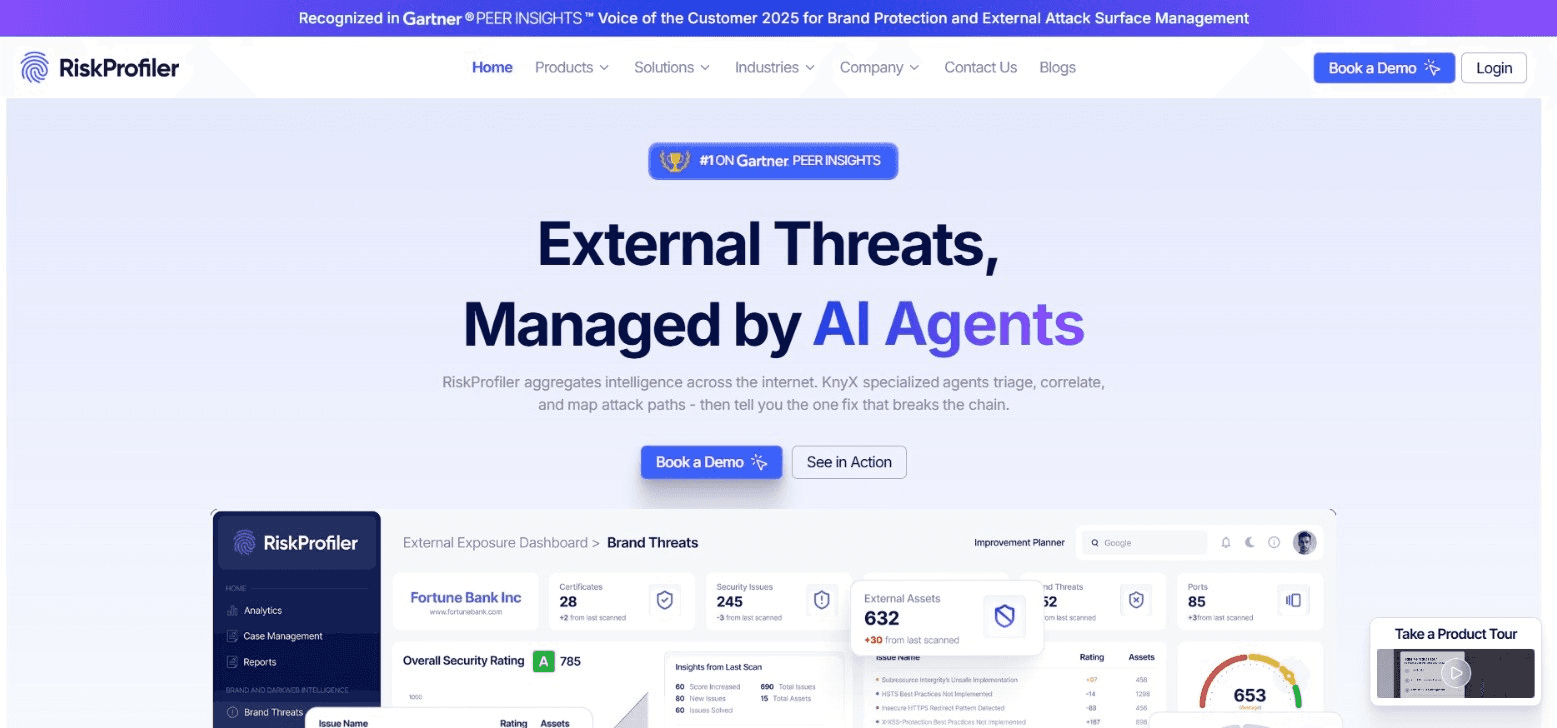
RiskProfiler delivers agentic AI-driven external threat exposure management through a unified platform. It covers EASM, Cloud ASM, dark web monitoring, brand protection, TPRM, and cyber threat intelligence. RiskProfiler External Attack Surface Management correlates DNS, cloud, certificate, IP, and exposed service telemetry into contextualized attack surface insights across enterprise environments.
Company Overview
Founded: 2019
Headquarters: Rock Hill, South Carolina, USA
Employees: 51–200
Certifications: SOC 2, ISO 27001, GDPR
Recognition: Gartner Peer Insights #2 External Attack Surface Management (5/5)
Key Features:
KnyX Recon AI: Correlates external attack surface signals across DNS, IPs, cloud assets, certificates, and exposed services into contextualized risk intelligence.
Unified Exposure Management: Combines EASM, Cloud ASM, dark web monitoring, brand protection, and vendor risk intelligence within a single operational platform.
Brand and Identity Protection: Detects phishing domains, fake mobile apps, impersonation infrastructure, leaked credentials, and social media abuse with takedown workflows.
Attack Path and Third-Party Risk Visibility: Maps external exposure relationships across suppliers, subsidiaries, cloud assets, and third-party infrastructure using correlated exposure intelligence.
Pros
Consolidates multiple exposure management tools into one platform.
Fast onboarding surfaces exposure findings within hours.
Strong visibility across cloud, brand, and vendor risks.
Cons
Dashboard depth may overwhelm smaller security teams.
Advanced customization requires additional configuration effort.
Recommended For: Mid-market and enterprise security teams seeking unified visibility across external exposure, cloud attack surfaces, third-party risks, dark web intelligence, and brand abuse monitoring.
Schedule a RiskProfiler demo to see how agentic AI helps identify, prioritize, and manage external exposures before they become security incidents.
2. CrowdStrike Falcon Surface
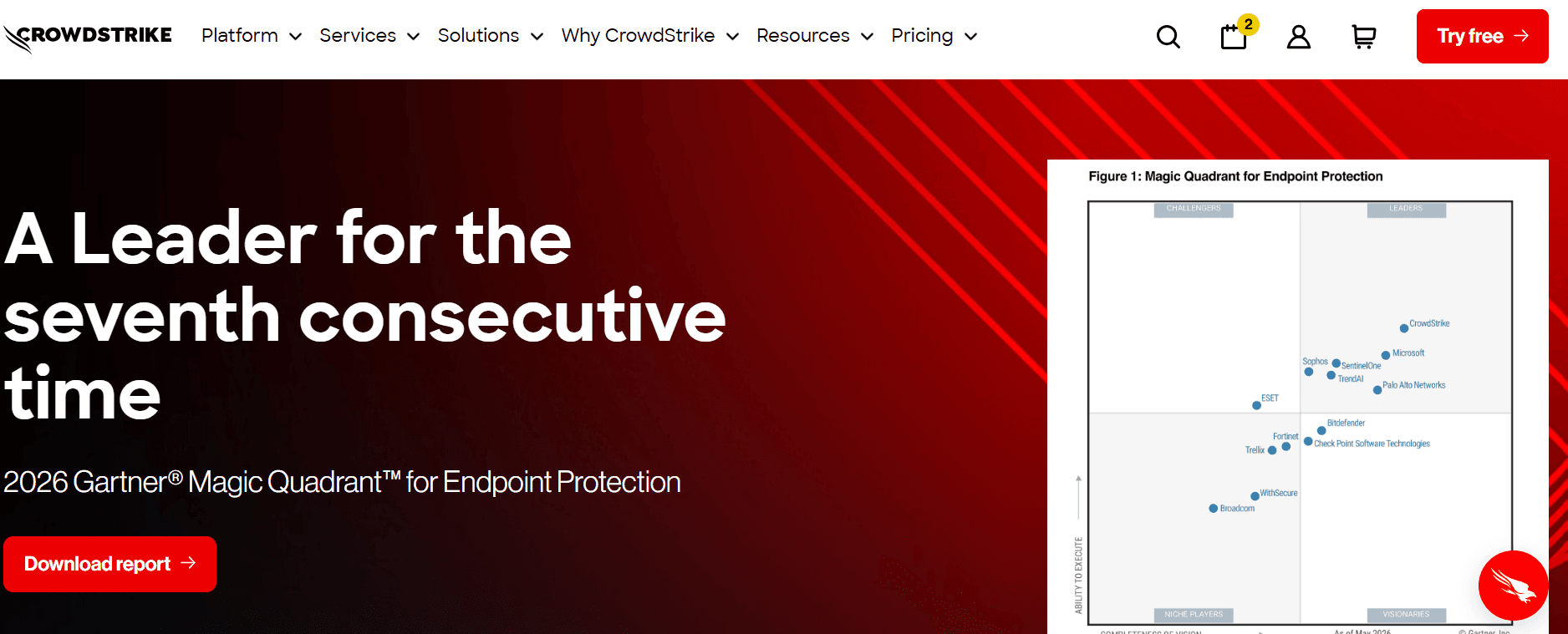
CrowdStrike Falcon Surface is an EASM module within the CrowdStrike Falcon platform. It became part of the Falcon Exposure Management suite after CrowdStrike acquired Reposify in 2022. The platform uses proprietary internet mapping technology to identify internet-facing assets continuously. It integrates with Falcon XDR, threat intelligence, and exposure management workflows across enterprise environments.
Company Overview
Founded: 2011 (CrowdStrike)
Headquarters: Austin, Texas, USA
Employees: 5,001–10,000
Certifications: SOC 2 Type II, ISO 27001 (CrowdStrike Falcon platform)
Recognition: Gartner Magic Quadrant Leader for Endpoint Protection Platforms (multiple consecutive years)
Key Features:
Zero-Touch Asset Discovery: Continuously identifies known and unknown internet-facing assets across cloud, subsidiary, and third-party environments.
Adversary-Based Exposure Prioritization: Uses CrowdStrike threat intelligence to prioritize external exposure linked to active attacker behavior and exploitable risks.
Continuous External Monitoring: Tracks exposed services, DNS changes, certificate updates, and newly discovered external attack surface exposure continuously.
Falcon Ecosystem Integration: Integrates with Falcon Insight XDR, Falcon Spotlight, and Falcon Intelligence Recon through a centralized operational console.
Pros
Strong operational fit for existing Falcon customers.
Threat intelligence adds real attacker context.
A centralized console reduces security tool sprawl.
Cons
Full platform value depends on broader Falcon integrations.
Advanced capabilities may require additional Falcon licensing.
Recommended For: Large enterprises already using CrowdStrike Falcon for endpoint security, XDR, or threat intelligence operations requiring integrated external attack surface visibility.
3. Microsoft Defender External Attack Surface Management
Microsoft Defender External Attack Surface Management is built on capabilities acquired through Microsoft’s RiskIQ acquisition in 2021. The platform integrates with Microsoft Defender, Microsoft Sentinel, and Defender for Cloud to provide external asset discovery, shadow IT visibility, and internet-facing exposure monitoring across hybrid enterprise environments.
Company Overview
Founded: 1975 (Microsoft Corporation)
Headquarters: Redmond, Washington
Employees: ~228,000 worldwide
Certifications: Microsoft maintains an extensive certification portfolio, including ISO/IEC 27001, 27017, 27018, 27701; SOC 1/2/3; FedRAMP High; HIPAA; GDPR; PCI DSS, plus regional certifications across 100+ jurisdictions (per Microsoft Trust Center)
Recognition: Microsoft Defender External Attack Surface Management is listed on Gartner Peer Insights for the External Attack Surface Management category.
Key Features:
Seed-Based Asset Discovery: Expands from known domains, IP ranges, and certificates to identify related internet-facing assets and external infrastructure exposure.
Shadow IT and External Asset Visibility: Monitors domains, hosts, SSL certificates, open ports, web applications, and unmanaged internet-facing services continuously.
Microsoft Security Ecosystem Integration: Integrates with Microsoft Sentinel, Defender for Endpoint, Defender for Cloud, and Security Copilot across Azure security operations workflows.
Exposure Prioritization and Compliance Insights: Provides asset prioritization workflows alongside CVSS-based exposure analysis and security posture visibility dashboards.
Pros
Strong integration across Microsoft security products.
Transparent per-asset pricing simplifies budgeting.
Effective visibility into legacy and unmanaged assets.
Cons
Best suited for Microsoft-centric infrastructure environments.
Seed-based discovery may require known asset inputs initially.
Recommended For: Organizations using Microsoft Azure, Microsoft 365, Sentinel, or Defender platforms requiring integrated external attack surface monitoring and shadow IT visibility.
4. FireCompass
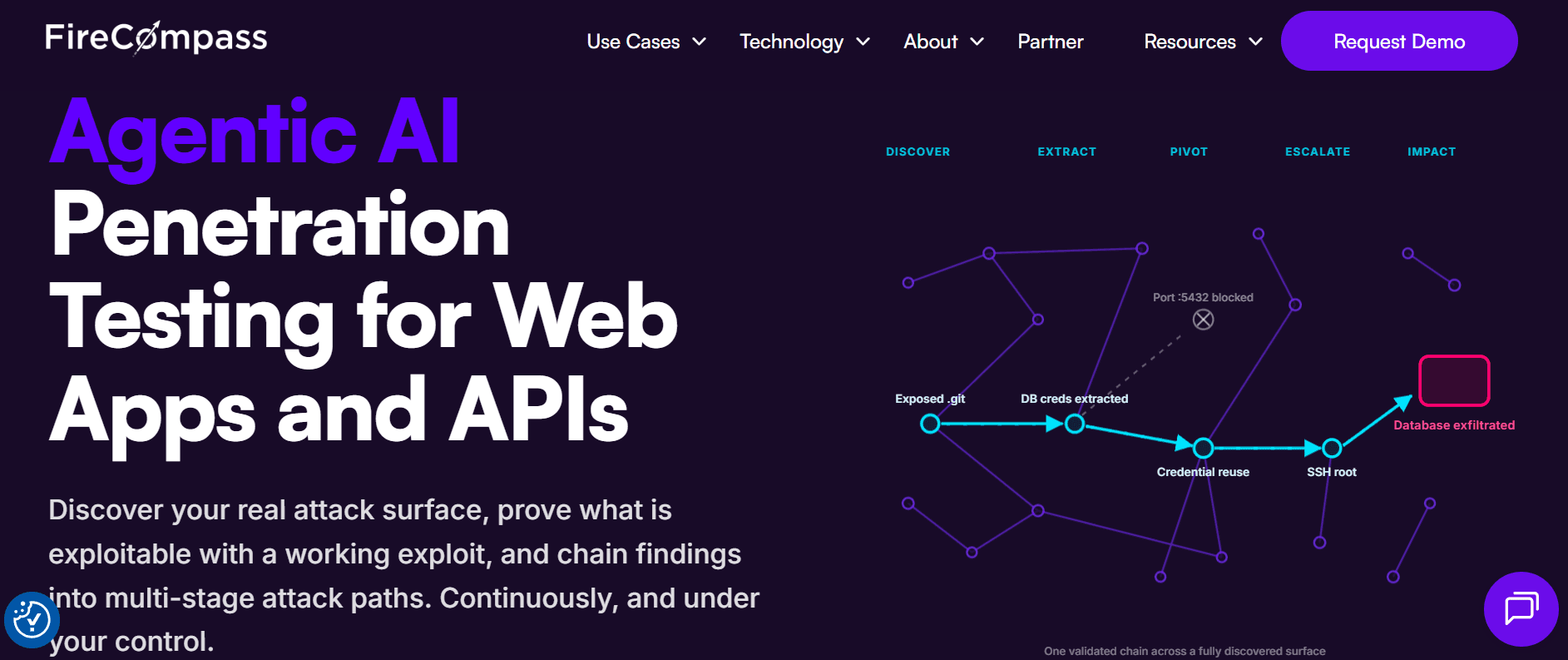
FireCompass combines external attack surface management with continuous automated red teaming and adversary emulation. The platform continuously maps shadow assets, validates exploitability through controlled security testing, and identifies attack paths across internet-facing infrastructure, APIs, applications, and cloud environments using AI-driven reconnaissance workflows.
Company Overview
Founded: 2019
Headquarters: Boston, Massachusetts
Employees: 11-50
Certifications: USPTO-awarded patent for Automated Red Teaming technology
Recognition: Gartner Peer Insights listed (EASM)
Key Features:
Continuous Automated Red Teaming: Continuously emulates attacker techniques to identify exploitable attack paths across applications, APIs, and internet-facing infrastructure.
AI-Driven Shadow Asset Discovery: Continuously identifies unmanaged internet-facing assets, exposed services, and cloud attack surface exposure across hybrid environments.
Exploitability Validation: Uses controlled validation testing to confirm exploitable exposure and reduce false positives during remediation workflows.
Unified Exposure and PTaaS Platform: Combines EASM, PTaaS, API testing, infrastructure testing, and CTEM workflows within a centralized operational platform.
Pros
Active validation reduces false-positive investigation workload.
Combines EASM and automated red teaming within one platform.
Strong visibility across APIs and cloud environments.
Cons
Platform complexity may require experienced security teams.
Pricing requires direct enterprise sales engagement.
Recommended For: BFSI, telecom, and enterprise organizations requiring EASM combined with continuous adversary emulation and exploitability validation.
5. Palo Alto Networks Cortex Xpanse

Palo Alto Networks Cortex Xpanse is built on Expanse technology acquired by Palo Alto Networks in 2020. The platform continuously scans internet-facing infrastructure at internet scale to identify exposed assets. They also spot unmanaged services, supply chain exposure, and externally reachable attack paths across enterprise environments.
Company Overview
Founded: 2005 (Palo Alto Networks)
Headquarters: Santa Clara, California
Employees: 16,068 worldwide
Certifications: ISO/IEC 27001, 27017, 27018, 27701; SOC 2; FedRAMP Authorized; FIPS 140-2; Common Criteria; StateRAMP (per Palo Alto Networks Trust Center)
Recognition: Cortex Xpanse is used by branches of the U.S. military and large enterprises (per Palo Alto Networks product page)
Key Features:
Internet-Scale Active Discovery: Continuously scans the global IPv4 space to identify exposed assets, open ports, shadow infrastructure, and unmanaged internet-facing services.
AI-Driven Risk Prioritization: Uses machine learning models and exposure context to prioritize exploitable attack paths and externally reachable risks.
Automated Remediation Workflows: Integrates with Cortex XSOAR, Cortex XDR, and Prisma Cloud to automate remediation and exposure response workflows.
Supply Chain and Compliance Visibility: Provides visibility into subsidiary exposure, third-party infrastructure risks, and compliance posture across GDPR, HIPAA, PCI DSS, and ISO 27001 frameworks.
Pros
Massive internet scanning scale improves discovery coverage.
Automation reduces operational response overhead significantly.
Strong integration across the Cortex security ecosystem.
Cons
Enterprise deployments can become significantly expensive.
Initial configuration may require experienced security teams.
Recommended For: Large enterprises and government organizations requiring internet-scale attack surface discovery, automated remediation workflows, and deep integration with the Cortex security ecosystem.
Also Read: Top 5 Online External Attack Surface Management Companies in USA in 2026
How to Choose the Right Attack Surface Management Tools in India for Your Organization?
Attack surface management requirements differ across enterprise size, regulatory obligations, infrastructure complexity, and cloud adoption maturity. Selecting the wrong platform creates visibility gaps, fragmented asset inventories, delayed threat detection, and higher operational overhead during remediation and incident response processes.
Here’s how you can select attack surface management tools aligned with operational and security requirements:
For Large Enterprises (500+ Employees and Complex Infrastructure): Large enterprises should prioritize platforms supporting continuous discovery. This should be across multi-cloud environments, subsidiaries, remote endpoints, third-party infrastructure, and globally distributed internet-facing assets with centralized threat detection capabilities.
For Mid-Market Companies (50–500 Employees): Mid-market organizations should select platforms offering simplified deployment, automated asset inventories, integrated remediation workflows, and contextual risk prioritization without requiring large internal cybersecurity operations teams.
For BFSI and Regulated Industries in India: BFSI organizations should evaluate platforms supporting ISO 27001 alignment, external exposure monitoring, audit reporting, credential leak detection, and continuous monitoring for cyber threats targeting financial infrastructure and customer data.
For Startups and Cloud-Native Teams: Cloud-native teams should prioritize platforms capable of monitoring Kubernetes workloads, APIs, ephemeral cloud assets, CI/CD environments, and exposed developer infrastructure created through rapid deployment cycles.
Conclusion: Why Is RiskProfiler Important for External Attack Surface Management?
External attack surfaces continue to expand as organizations adopt cloud services, SaaS applications, remote infrastructure, and third-party integrations. Unknown internet-facing assets, exposed services, shadow IT, and misconfigurations can create security gaps that attackers actively exploit. Continuous visibility is essential for identifying and reducing external exposure before it becomes a security incident. When evaluating external attack surface management vendors, organizations should prioritize continuous asset discovery, risk prioritization, cloud visibility, and operational workflows that support faster remediation.
RiskProfiler helps organizations address these challenges through a unified platform that combines EASM, Cloud ASM, dark web monitoring, brand protection, TPRM, and cyber threat intelligence. Powered by KnyX Recon AI, the platform correlates exposure signals across domains, cloud assets, certificates, IPs, exposed services, and third-party infrastructure to provide contextualized risk intelligence.
Book a personalized RiskProfiler demo to gain deeper visibility into your external attack surface and uncover hidden exposures before attackers find them.
Your organization likely has more internet-facing assets than your security team can currently track. Leaving them unmanaged increases external exposure, attack paths, and potential security gaps. This article discusses the top 5 EASM tools that help improve visibility across exposed assets, cloud environments, third-party infrastructure, and unmanaged digital attack surfaces.
At a Glance
RiskProfiler: Agentic AI-powered external threat exposure management
CrowdStrike Falcon Surface: External asset discovery and attack surface monitoring
Microsoft Defender EASM: Continuous external asset discovery and attack surface visibility
FireCompass: Attack surface management and automated security validation
Palo Alto Cortex Xpanse: Internet-scale asset discovery and exposure identification
What Is External Attack Surface Management (EASM)?
External attack surface management (EASM) continuously identifies and monitors internet-facing digital assets. These assets include domains, APIs, cloud services, and external infrastructure.
EASM detects vulnerabilities, exposed assets, and misconfigurations before attackers exploit them. It improves visibility across expanding attack surfaces. It also helps security teams strengthen cybersecurity posture through proactive, real-time attack surface monitoring.
Key Features to Look for in External Attack Surface Management Solutions
Modern external attack surface management platforms must detect external risks across cloud environments, third-party vendors, exposed APIs, and unmanaged internet-facing assets. Attack surfaces expand continuously through SaaS adoption, remote work infrastructure, and shadow IT. An effective EASM tool must provide contextual attack surface intelligence instead of isolated vulnerability management data.
Here are the capabilities that define an effective external attack surface management platform:
Automated External Asset Discovery: Automated external asset discovery continuously identifies known and unknown internet-facing assets. This could be domains, APIs, cloud workloads, shadow IT systems, and unmanaged third-party infrastructure.
Continuous Monitoring Instead of Periodic Scanning: Continuous monitoring detects new external threats, DNS changes, exposed services, certificate updates, and misconfigurations faster than traditional point-in-time vulnerability scanning processes.
Risk Prioritization Beyond CVSS Scores: Effective risk prioritization analyzes exploitability, attack paths, asset criticality, and threat intelligence instead of relying exclusively on CVSS-based vulnerability management scoring models.
Dark Web and Brand Monitoring Integration: Integrated dark web monitoring detects leaked credentials, phishing domains, impersonation campaigns, and exposed corporate data linked to external attack surface exposure and brand abuse.
Third-Party and Supply Chain Risk Visibility: Third-party risk management capabilities identify vulnerabilities, exposed assets, and security weaknesses introduced through vendors, suppliers, SaaS providers, and external infrastructure dependencies.
Integration with SIEM, SOAR, and Ticketing Tools: Integration with SIEM, SOAR, Jira, Slack, and ServiceNow improves remediation workflows, incident response coordination, and operational efficiency across cybersecurity and exposure management programs.
How External Attack Surface Management Vendors Were Evaluated?
External attack surface management platforms were evaluated against real-world exposure discovery, asset attribution accuracy, and operational remediation capabilities. The evaluation focused on identifying platforms capable of detecting unmanaged internet-facing assets, validating exploitable exposure, and reducing investigation overhead for security teams operating across hybrid and cloud-native environments.
The following criteria were used to evaluate external attack surface management platforms:
External Asset Discovery Accuracy: Platforms were assessed on their ability to identify orphaned subdomains, abandoned development servers, exposed APIs, unmanaged cloud buckets, internet-accessible RDP services, and shadow IT assets.
Passive and Active Discovery Capabilities: Evaluation included certificate transparency monitoring, ASN correlation, DNS enumeration, WHOIS mapping, and active scanning techniques used to discover external-facing assets continuously.
Technology Stack and Cloud Visibility: Platforms supporting Azure, AWS, Kubernetes, SaaS applications, and hybrid infrastructure environments received higher ratings for broader attack surface discovery coverage and operational compatibility.
Exposure Validation and False Positive Reduction: Vendors were evaluated on exposure validation accuracy, asset attribution confidence scoring, and their ability to distinguish exploitable findings from non-actionable external exposure alerts.
Attack Path and Contextual Risk Analysis: Platforms were assessed on identifying externally exploitable attack paths involving exposed services, weak authentication mechanisms, leaked credentials, and publicly accessible administrative interfaces.
Proof of Concept Detection Performance: PoC testing measured discovery speed for newly exposed assets, monitoring consistency, remediation workflow integration, and visibility into previously unknown internet-facing infrastructure components.
Operational Integration and Workflow Support: Evaluation included integration support for SIEM platforms, Jira, ServiceNow, Slack, patch management systems, and incident response workflows used by enterprise security operations teams.
Long-Term Operational and Management Overhead: Assessment included API limitations, deployment complexity, analyst investigation workload, alert triage requirements, and ongoing maintenance demands affecting management process scalability.
Top 5 Best External Attack Surface Management Services and Tools in 2025
External attack surface management platforms differ significantly in discovery depth, exposure validation accuracy, cloud visibility, and operational integration capabilities. The following attack surface monitoring tools were selected based on asset discovery performance, contextual risk analysis, third-party visibility, monitoring consistency, and suitability across enterprise, hybrid, and cloud-native infrastructure environments.
Platform | Best At | Standout Capability |
RiskProfiler | Unified external threat exposure management | Single platform combining EASM, TPRM, brand protection, dark web monitoring, and cloud ASM |
CrowdStrike Falcon Surface | Adversary-driven attack surface management | Threat intelligence-enriched risk prioritization via native Falcon ecosystem integration |
Microsoft Defender EASM | Azure-native external asset discovery | Transparent per-asset pricing with native Microsoft Sentinel and Defender ecosystem integration |
FireCompass | Continuous automated red teaming and EASM | Active exploit validation that eliminates false positives across external attack surfaces |
Palo Alto Cortex Xpanse | Internet-scale active attack surface discovery | 500B+ daily port scans with automated remediation playbooks across the Cortex ecosystem |
1. RiskProfiler
RiskProfiler delivers agentic AI-driven external threat exposure management through a unified platform. It covers EASM, Cloud ASM, dark web monitoring, brand protection, TPRM, and cyber threat intelligence. RiskProfiler External Attack Surface Management correlates DNS, cloud, certificate, IP, and exposed service telemetry into contextualized attack surface insights across enterprise environments.
Company Overview
Founded: 2019
Headquarters: Rock Hill, South Carolina, USA
Employees: 51–200
Certifications: SOC 2, ISO 27001, GDPR
Recognition: Gartner Peer Insights #2 External Attack Surface Management (5/5)
Key Features:
KnyX Recon AI: Correlates external attack surface signals across DNS, IPs, cloud assets, certificates, and exposed services into contextualized risk intelligence.
Unified Exposure Management: Combines EASM, Cloud ASM, dark web monitoring, brand protection, and vendor risk intelligence within a single operational platform.
Brand and Identity Protection: Detects phishing domains, fake mobile apps, impersonation infrastructure, leaked credentials, and social media abuse with takedown workflows.
Attack Path and Third-Party Risk Visibility: Maps external exposure relationships across suppliers, subsidiaries, cloud assets, and third-party infrastructure using correlated exposure intelligence.
Pros
Consolidates multiple exposure management tools into one platform.
Fast onboarding surfaces exposure findings within hours.
Strong visibility across cloud, brand, and vendor risks.
Cons
Dashboard depth may overwhelm smaller security teams.
Advanced customization requires additional configuration effort.
Recommended For: Mid-market and enterprise security teams seeking unified visibility across external exposure, cloud attack surfaces, third-party risks, dark web intelligence, and brand abuse monitoring.
Schedule a RiskProfiler demo to see how agentic AI helps identify, prioritize, and manage external exposures before they become security incidents.
2. CrowdStrike Falcon Surface
CrowdStrike Falcon Surface is an EASM module within the CrowdStrike Falcon platform. It became part of the Falcon Exposure Management suite after CrowdStrike acquired Reposify in 2022. The platform uses proprietary internet mapping technology to identify internet-facing assets continuously. It integrates with Falcon XDR, threat intelligence, and exposure management workflows across enterprise environments.
Company Overview
Founded: 2011 (CrowdStrike)
Headquarters: Austin, Texas, USA
Employees: 5,001–10,000
Certifications: SOC 2 Type II, ISO 27001 (CrowdStrike Falcon platform)
Recognition: Gartner Magic Quadrant Leader for Endpoint Protection Platforms (multiple consecutive years)
Key Features:
Zero-Touch Asset Discovery: Continuously identifies known and unknown internet-facing assets across cloud, subsidiary, and third-party environments.
Adversary-Based Exposure Prioritization: Uses CrowdStrike threat intelligence to prioritize external exposure linked to active attacker behavior and exploitable risks.
Continuous External Monitoring: Tracks exposed services, DNS changes, certificate updates, and newly discovered external attack surface exposure continuously.
Falcon Ecosystem Integration: Integrates with Falcon Insight XDR, Falcon Spotlight, and Falcon Intelligence Recon through a centralized operational console.
Pros
Strong operational fit for existing Falcon customers.
Threat intelligence adds real attacker context.
A centralized console reduces security tool sprawl.
Cons
Full platform value depends on broader Falcon integrations.
Advanced capabilities may require additional Falcon licensing.
Recommended For: Large enterprises already using CrowdStrike Falcon for endpoint security, XDR, or threat intelligence operations requiring integrated external attack surface visibility.
3. Microsoft Defender External Attack Surface Management
Microsoft Defender External Attack Surface Management is built on capabilities acquired through Microsoft’s RiskIQ acquisition in 2021. The platform integrates with Microsoft Defender, Microsoft Sentinel, and Defender for Cloud to provide external asset discovery, shadow IT visibility, and internet-facing exposure monitoring across hybrid enterprise environments.
Company Overview
Founded: 1975 (Microsoft Corporation)
Headquarters: Redmond, Washington
Employees: ~228,000 worldwide
Certifications: Microsoft maintains an extensive certification portfolio, including ISO/IEC 27001, 27017, 27018, 27701; SOC 1/2/3; FedRAMP High; HIPAA; GDPR; PCI DSS, plus regional certifications across 100+ jurisdictions (per Microsoft Trust Center)
Recognition: Microsoft Defender External Attack Surface Management is listed on Gartner Peer Insights for the External Attack Surface Management category.
Key Features:
Seed-Based Asset Discovery: Expands from known domains, IP ranges, and certificates to identify related internet-facing assets and external infrastructure exposure.
Shadow IT and External Asset Visibility: Monitors domains, hosts, SSL certificates, open ports, web applications, and unmanaged internet-facing services continuously.
Microsoft Security Ecosystem Integration: Integrates with Microsoft Sentinel, Defender for Endpoint, Defender for Cloud, and Security Copilot across Azure security operations workflows.
Exposure Prioritization and Compliance Insights: Provides asset prioritization workflows alongside CVSS-based exposure analysis and security posture visibility dashboards.
Pros
Strong integration across Microsoft security products.
Transparent per-asset pricing simplifies budgeting.
Effective visibility into legacy and unmanaged assets.
Cons
Best suited for Microsoft-centric infrastructure environments.
Seed-based discovery may require known asset inputs initially.
Recommended For: Organizations using Microsoft Azure, Microsoft 365, Sentinel, or Defender platforms requiring integrated external attack surface monitoring and shadow IT visibility.
4. FireCompass
FireCompass combines external attack surface management with continuous automated red teaming and adversary emulation. The platform continuously maps shadow assets, validates exploitability through controlled security testing, and identifies attack paths across internet-facing infrastructure, APIs, applications, and cloud environments using AI-driven reconnaissance workflows.
Company Overview
Founded: 2019
Headquarters: Boston, Massachusetts
Employees: 11-50
Certifications: USPTO-awarded patent for Automated Red Teaming technology
Recognition: Gartner Peer Insights listed (EASM)
Key Features:
Continuous Automated Red Teaming: Continuously emulates attacker techniques to identify exploitable attack paths across applications, APIs, and internet-facing infrastructure.
AI-Driven Shadow Asset Discovery: Continuously identifies unmanaged internet-facing assets, exposed services, and cloud attack surface exposure across hybrid environments.
Exploitability Validation: Uses controlled validation testing to confirm exploitable exposure and reduce false positives during remediation workflows.
Unified Exposure and PTaaS Platform: Combines EASM, PTaaS, API testing, infrastructure testing, and CTEM workflows within a centralized operational platform.
Pros
Active validation reduces false-positive investigation workload.
Combines EASM and automated red teaming within one platform.
Strong visibility across APIs and cloud environments.
Cons
Platform complexity may require experienced security teams.
Pricing requires direct enterprise sales engagement.
Recommended For: BFSI, telecom, and enterprise organizations requiring EASM combined with continuous adversary emulation and exploitability validation.
5. Palo Alto Networks Cortex Xpanse
Palo Alto Networks Cortex Xpanse is built on Expanse technology acquired by Palo Alto Networks in 2020. The platform continuously scans internet-facing infrastructure at internet scale to identify exposed assets. They also spot unmanaged services, supply chain exposure, and externally reachable attack paths across enterprise environments.
Company Overview
Founded: 2005 (Palo Alto Networks)
Headquarters: Santa Clara, California
Employees: 16,068 worldwide
Certifications: ISO/IEC 27001, 27017, 27018, 27701; SOC 2; FedRAMP Authorized; FIPS 140-2; Common Criteria; StateRAMP (per Palo Alto Networks Trust Center)
Recognition: Cortex Xpanse is used by branches of the U.S. military and large enterprises (per Palo Alto Networks product page)
Key Features:
Internet-Scale Active Discovery: Continuously scans the global IPv4 space to identify exposed assets, open ports, shadow infrastructure, and unmanaged internet-facing services.
AI-Driven Risk Prioritization: Uses machine learning models and exposure context to prioritize exploitable attack paths and externally reachable risks.
Automated Remediation Workflows: Integrates with Cortex XSOAR, Cortex XDR, and Prisma Cloud to automate remediation and exposure response workflows.
Supply Chain and Compliance Visibility: Provides visibility into subsidiary exposure, third-party infrastructure risks, and compliance posture across GDPR, HIPAA, PCI DSS, and ISO 27001 frameworks.
Pros
Massive internet scanning scale improves discovery coverage.
Automation reduces operational response overhead significantly.
Strong integration across the Cortex security ecosystem.
Cons
Enterprise deployments can become significantly expensive.
Initial configuration may require experienced security teams.
Recommended For: Large enterprises and government organizations requiring internet-scale attack surface discovery, automated remediation workflows, and deep integration with the Cortex security ecosystem.
Also Read: Top 5 Online External Attack Surface Management Companies in USA in 2026
How to Choose the Right Attack Surface Management Tools in India for Your Organization?
Attack surface management requirements differ across enterprise size, regulatory obligations, infrastructure complexity, and cloud adoption maturity. Selecting the wrong platform creates visibility gaps, fragmented asset inventories, delayed threat detection, and higher operational overhead during remediation and incident response processes.
Here’s how you can select attack surface management tools aligned with operational and security requirements:
For Large Enterprises (500+ Employees and Complex Infrastructure): Large enterprises should prioritize platforms supporting continuous discovery. This should be across multi-cloud environments, subsidiaries, remote endpoints, third-party infrastructure, and globally distributed internet-facing assets with centralized threat detection capabilities.
For Mid-Market Companies (50–500 Employees): Mid-market organizations should select platforms offering simplified deployment, automated asset inventories, integrated remediation workflows, and contextual risk prioritization without requiring large internal cybersecurity operations teams.
For BFSI and Regulated Industries in India: BFSI organizations should evaluate platforms supporting ISO 27001 alignment, external exposure monitoring, audit reporting, credential leak detection, and continuous monitoring for cyber threats targeting financial infrastructure and customer data.
For Startups and Cloud-Native Teams: Cloud-native teams should prioritize platforms capable of monitoring Kubernetes workloads, APIs, ephemeral cloud assets, CI/CD environments, and exposed developer infrastructure created through rapid deployment cycles.
Conclusion: Why Is RiskProfiler Important for External Attack Surface Management?
External attack surfaces continue to expand as organizations adopt cloud services, SaaS applications, remote infrastructure, and third-party integrations. Unknown internet-facing assets, exposed services, shadow IT, and misconfigurations can create security gaps that attackers actively exploit. Continuous visibility is essential for identifying and reducing external exposure before it becomes a security incident. When evaluating external attack surface management vendors, organizations should prioritize continuous asset discovery, risk prioritization, cloud visibility, and operational workflows that support faster remediation.
RiskProfiler helps organizations address these challenges through a unified platform that combines EASM, Cloud ASM, dark web monitoring, brand protection, TPRM, and cyber threat intelligence. Powered by KnyX Recon AI, the platform correlates exposure signals across domains, cloud assets, certificates, IPs, exposed services, and third-party infrastructure to provide contextualized risk intelligence.
Book a personalized RiskProfiler demo to gain deeper visibility into your external attack surface and uncover hidden exposures before attackers find them.
Jump to
Share Article
We Have Answers!
Explore our FAQ to learn more about how RiskProfiler can help safeguard your digital assets and manage risks efficiently.
How do external attack surface management tools help prevent data breaches?
Top external attack surface management platforms identify exposed services, leaked credentials, abandoned subdomains, vulnerable VPN gateways, and unmanaged cloud assets before a threat actor launches a successful attack. Continuous monitoring helps organizations reduce attack surfaces and detect external exposure linked to potential data breaches earlier.
What should organizations compare before selecting the best external attack surface management platform?
Organizations should compare attack surface discovery accuracy, false positive reduction, asset attribution confidence, third-party visibility, and remediation workflow integration. Gartner Peer Insights reviews, operational testing, and external perspectives from security teams can also help evaluate external attack surface management platforms more effectively. Platforms such as RiskProfiler further combine attack surface visibility with cloud exposure monitoring, threat intelligence, and third-party risk visibility to support broader external risk management.
Why is external attack surface visibility important alongside internal attack surface monitoring?
Internal attack surface monitoring identifies risks within corporate networks, endpoints, and authenticated systems. External attack surface management provides visibility into internet-facing assets accessible to attackers, including exposed APIs, cloud services, remote access infrastructure, and third-party digital assets outside traditional security boundaries.
Which industries benefit most from external attack surface management platforms?
BFSI, healthcare, SaaS, telecom, and e-commerce organizations benefit significantly from top external attack surface management platforms. These sectors maintain large volumes of internet-facing assets, third-party integrations, customer portals, and exposed APIs frequently targeted during ransomware operations and credential-based attacks.
Latest Insights
Stay informed with expert perspectives on cybersecurity, attack surface management,
and building digital resilience.



Enterprise-Grade Security & Trust
Specialized intelligence agents working together toprotect your organization
Ready to Transform
Your Threat Management?
Join hundreds of security teams who trust KnyX to cut through the noise and focus on what matters most.
Book a Demo Today